Kee
Kee operated under TSLC Global (The Social Loan Company), a fintech company focusing on micro-lending and aiming to provide a wide range of digital banking services.
TSLC had an existing lending product in India called Cashe which uses an AI/ML algorithm that uses non-traditional data points to create an alternative credit score to support medium or low-income individuals that are underserved by traditional banking services.
The company was expanding globally but Cashe didn’t have the right technical infrastructure to integrate with other lending partners, and neither did it have the right brand reputation that can go globally. That’s why we had the opportunity to build something from the ground up while integrating with the alternative scoring mechanism.
Team
We started with a quite small tech team. It consists of 4 engineers with a VP of engineering, 2 product managers with a VP of product, and me, the only designer.
Later, the company signed an outsourcing software company to increase the engineering team members.
Market research
I was new to the fintech industry, so the first step I took when I got the job was to conduct market research on the loans and the BNPL ecosystem specifically. Primarily to understand the usual requirements from the customer, how BNPL companies make money, who are the big players in the region, and what shortcomings the market currently has.
It became clear that there’s a gap between the traditional bank loans and the BNPL scene. The banks cover big figures like AED 25K and above with many barriers for people with smaller income and lower credit scores. While BNPL only covers direct purchases from a specific list of merchants with a small cap on the maximum amount.
Purchases like medical bills, rent, school fees, or emergency funds are not easily reachable in the current lending market. And many banks won’t give out a credit card to a person with an income of less than 10K. This survey done in 2017 showed that around 65% of the total workforce in UAE earns AED 5000 or less, and 76.8% earn AED 10,000 or less.
That’s why microlending for amounts under AED 20K backed by an alternative credit scoring mechanism that supports people who are at the lower end of the central bank credit score can play a huge role in the whole MENA market.
Competitive analysis
My first assumption when approaching the design was that the registration is going to be the hardest and most critical part. Because usually, users need to provide a lot of information at the beginning to get access to any financial services.
So, the first step was to look at the other successful digital banks and fintech apps to see what are the required fields they ask for in the registration and how their experience was.
It was challenging to collect that information because all those apps were geo-restricted. So I had to rely on each platform support pages and community YouTube videos.
And from here we started laying out all the required information and started prioritizing them. Because in addition to the usual information like verifying their ID and their salary, there is also the alternative credit score engine that requires a lot more data.
Design prototypes
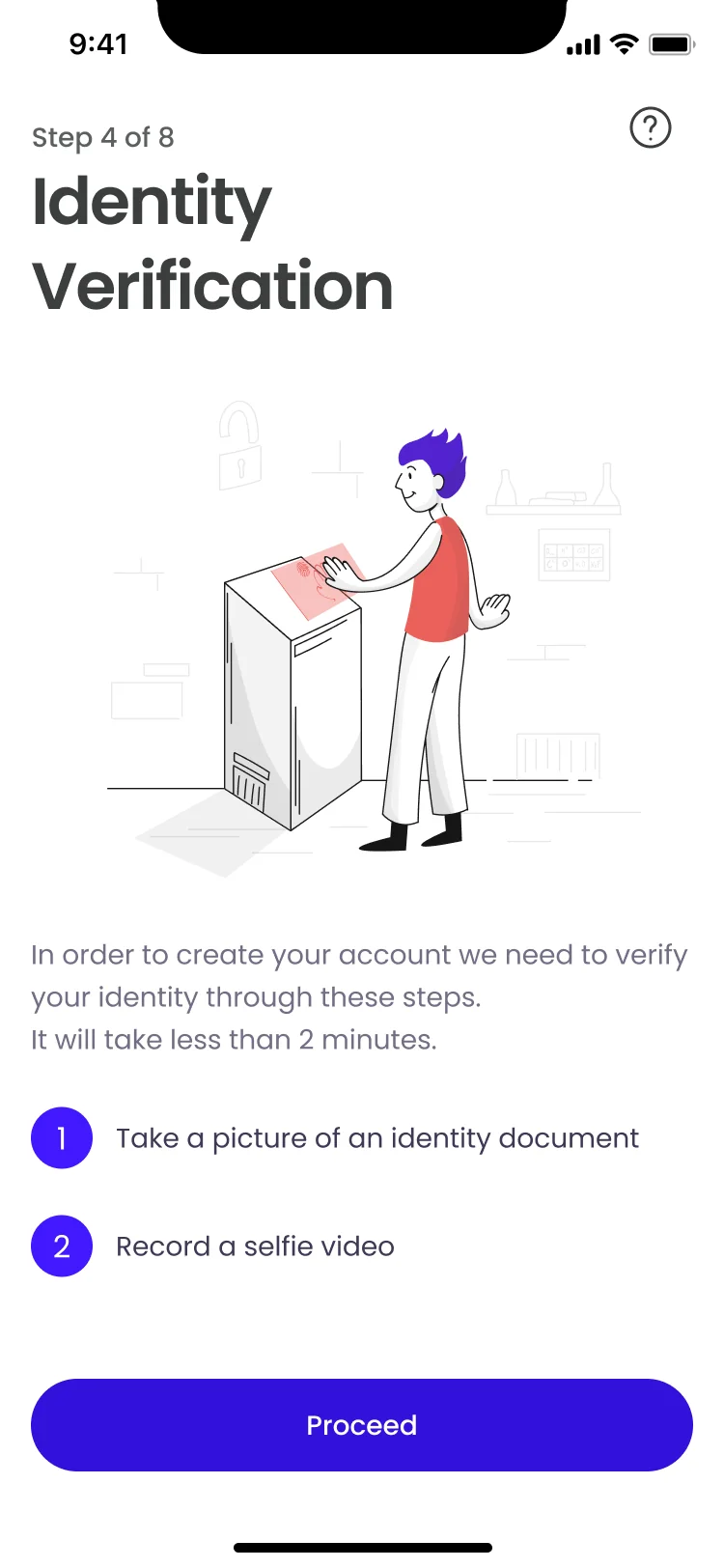
We started prototyping to see how the registration will look and feel with all those data flying around. The first thing I did was to group those data into clear steps so the user can get a sense of progress, and to save their progress so that if any user dropped off during the registration, they can continue again from where they left. Those steps are:
- Collecting basic information (Name, email, Date of birth, etc..)
- Collecting and verifying phone number
- Identity verification
- Bank integration/Salary verification
- Collecting job information (Alternative credit requirement)
- Collecting address information (Alternative credit requirement)
- Collecting phone metadata and contacts permissions (Alternative credit requirement)
- Adding a PIN code and enabling biometrics for sensitive actions
First prototype
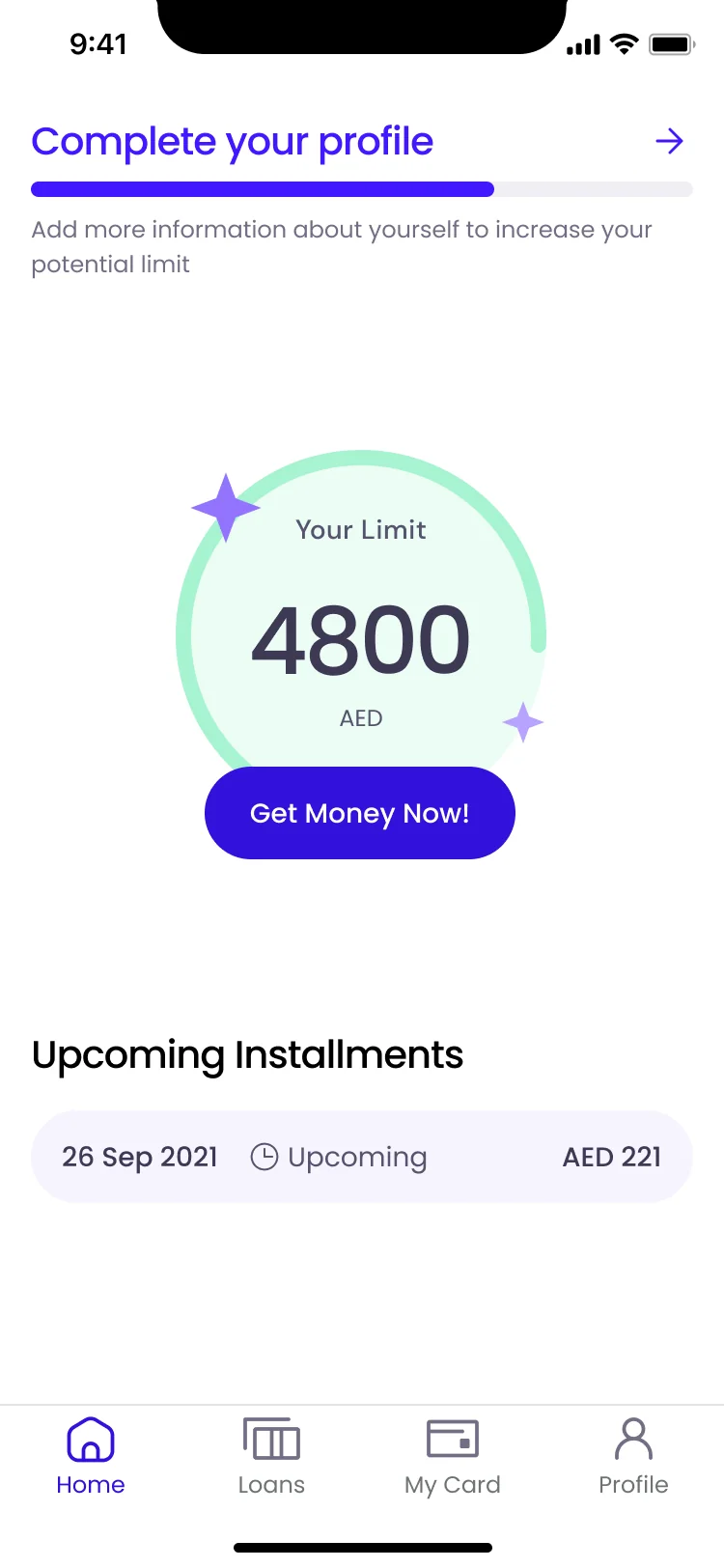
Then I continued prototyping the rest of the app to envision the end-to-end experience and share it with the different stakeholders, team members, and key partners.
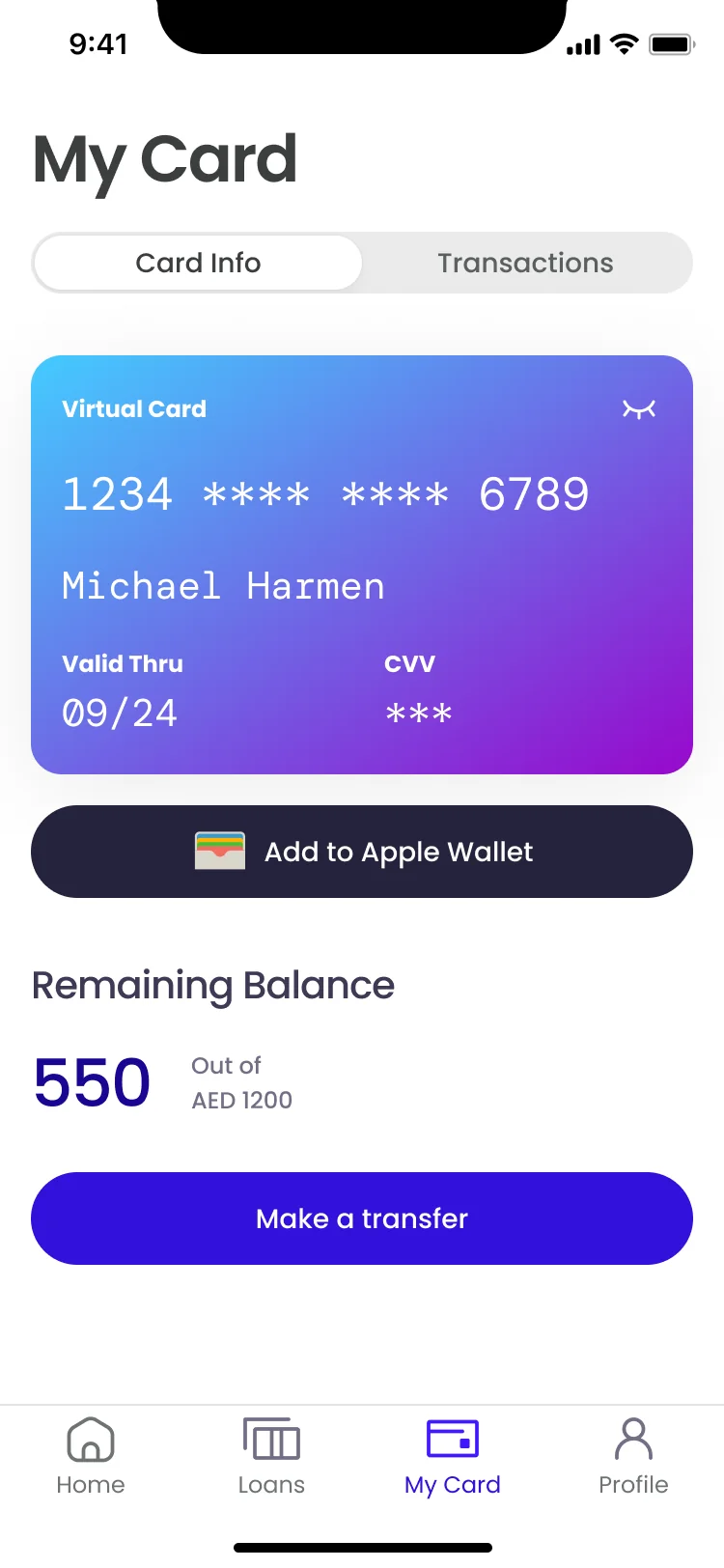
This vision includes also a virtual card that holds the loan amount once the customer applies for it. They also can add this virtual card to their phone wallet and use the loan instantly through Google or Apple pay. So the customer can sign up, apply for the loan, and consume it in less than 20 mins.
This first iteration was done before the new branding was finalized that’s why it looks a bit generic.
1st prototype link - Design pages link
Second prototype
At the start of development, there were some difficulties and changes in management so we scoped down the app and aimed for developing a closed beta to test the integration with our lending partner and have a successful money flow from our partner bank account to the customer’s bank account.
This was also in line with finalizing the new branding so we started updating the app visual design to incorporate the new branding. This was done in a very short time as we were having a tight deadline to finalize the closed beta.
2nd prototype link - Design pages link
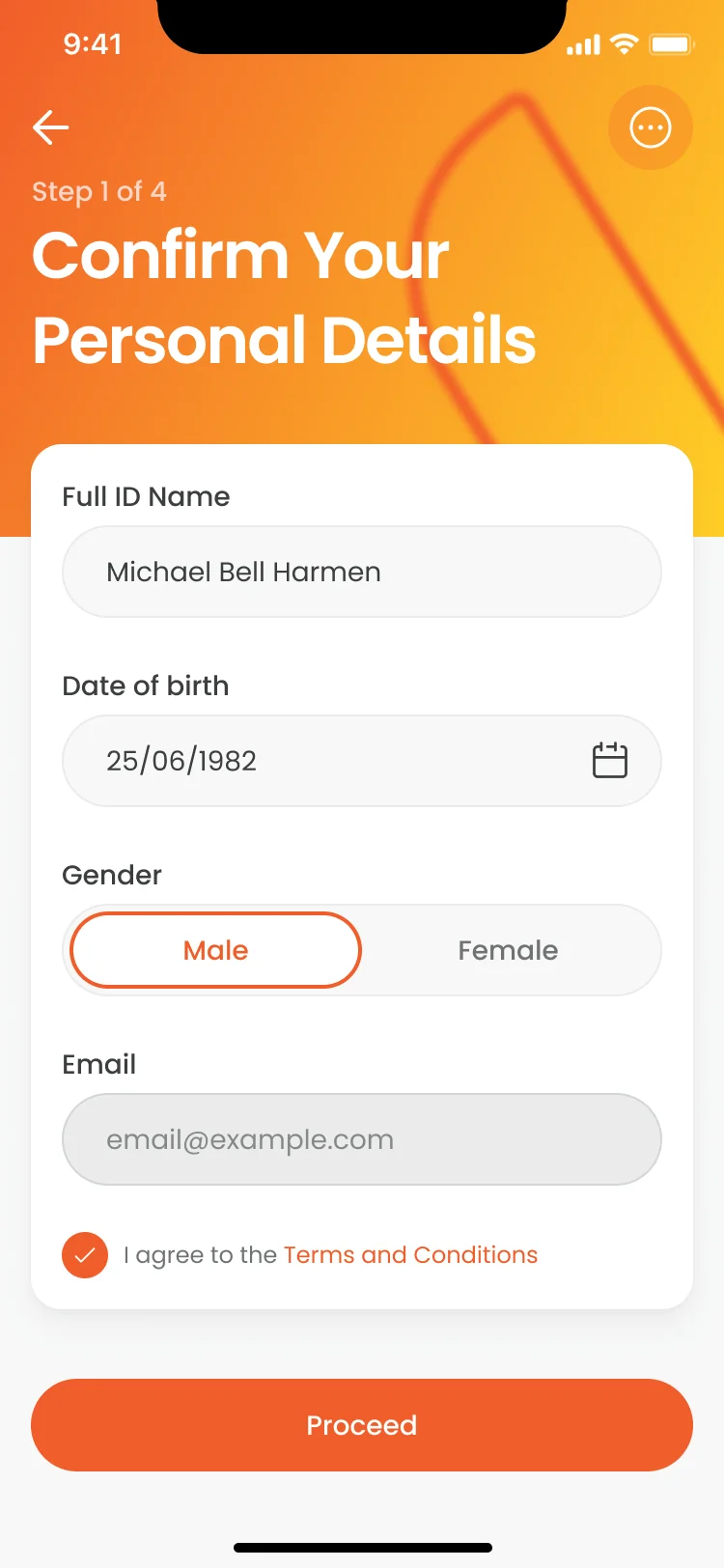
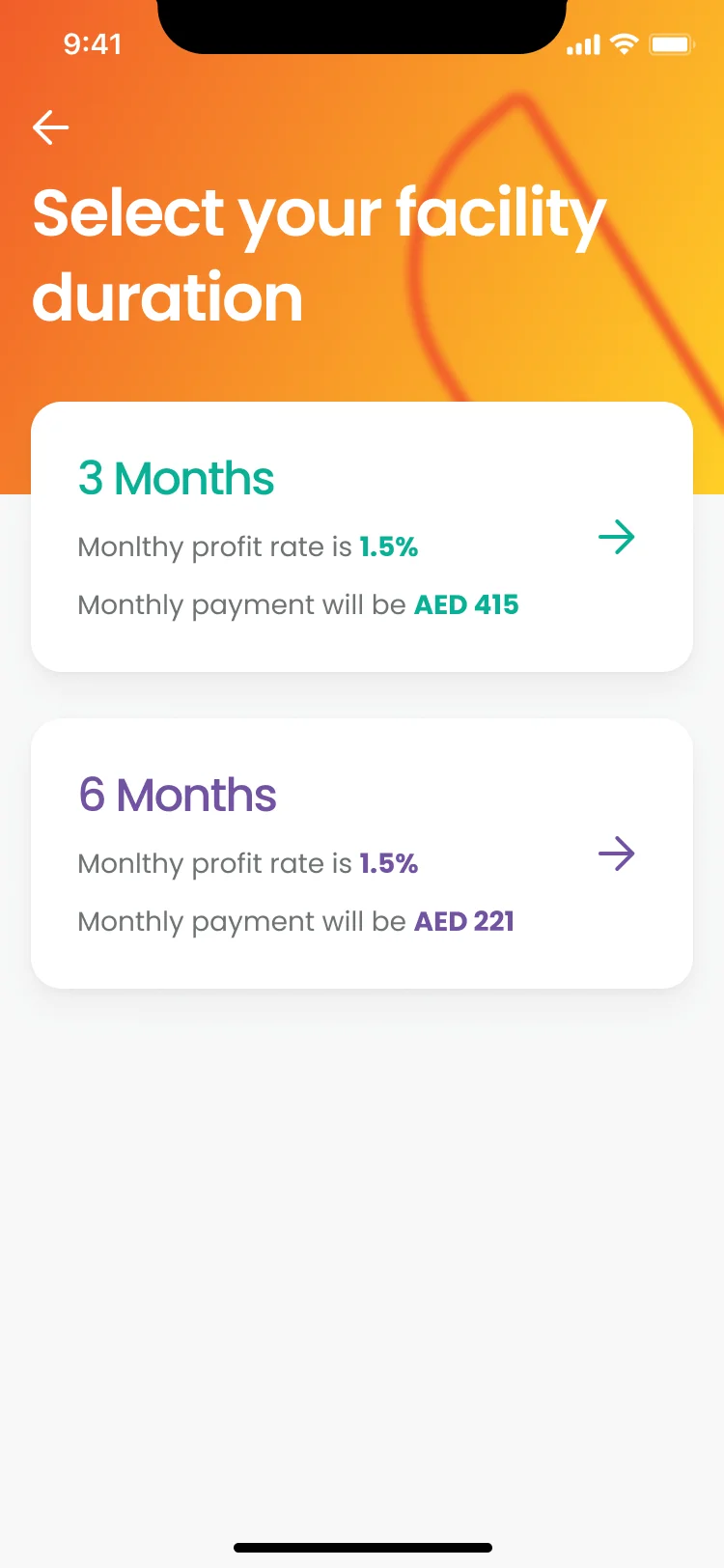
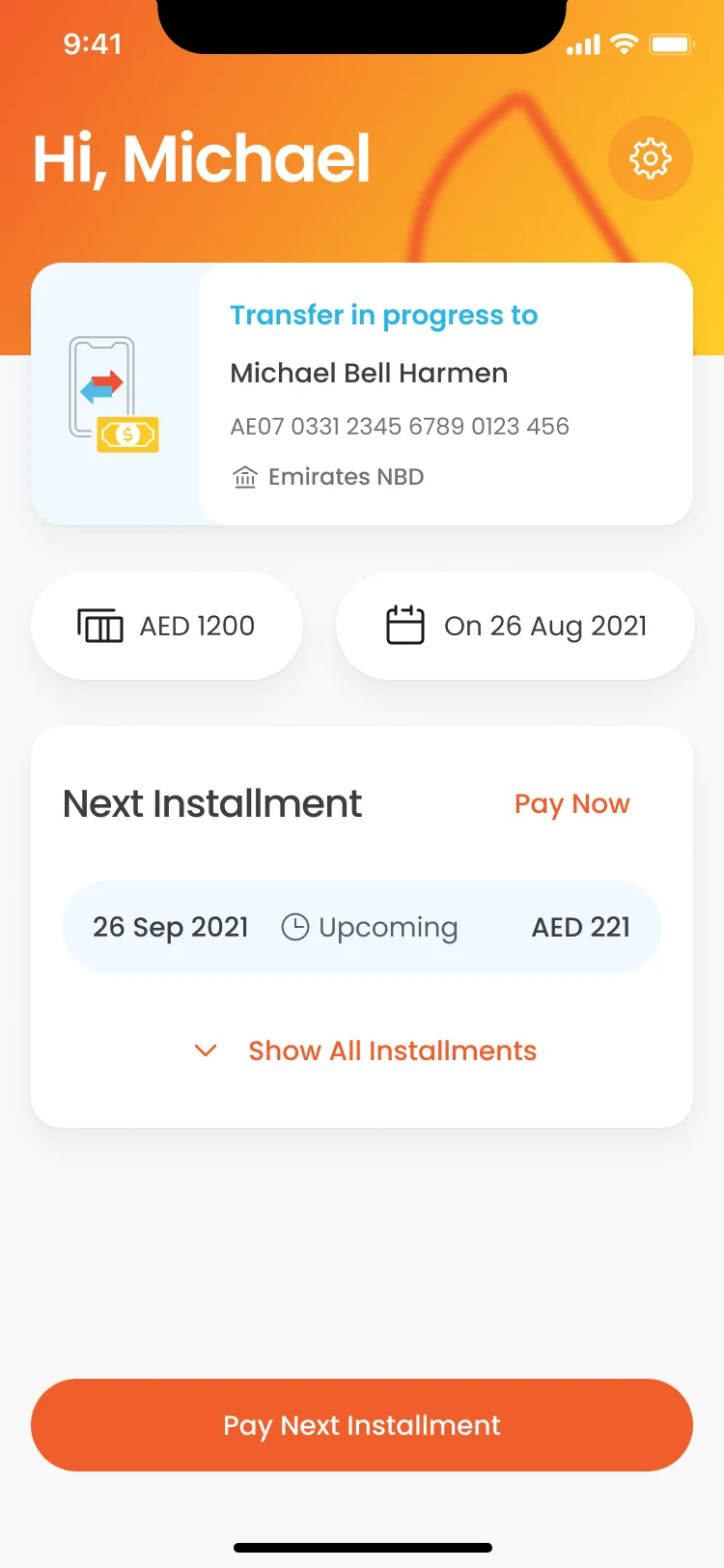
Third prototype
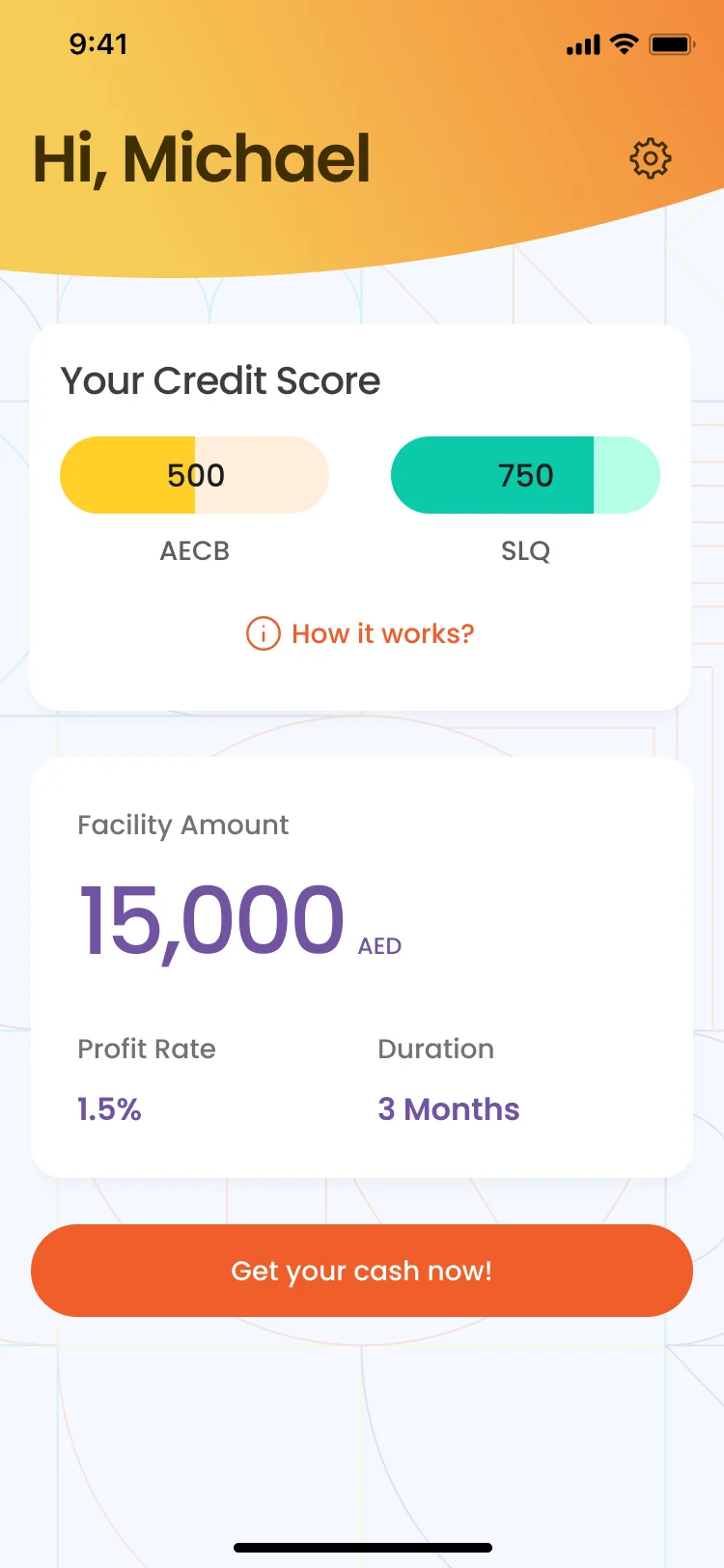
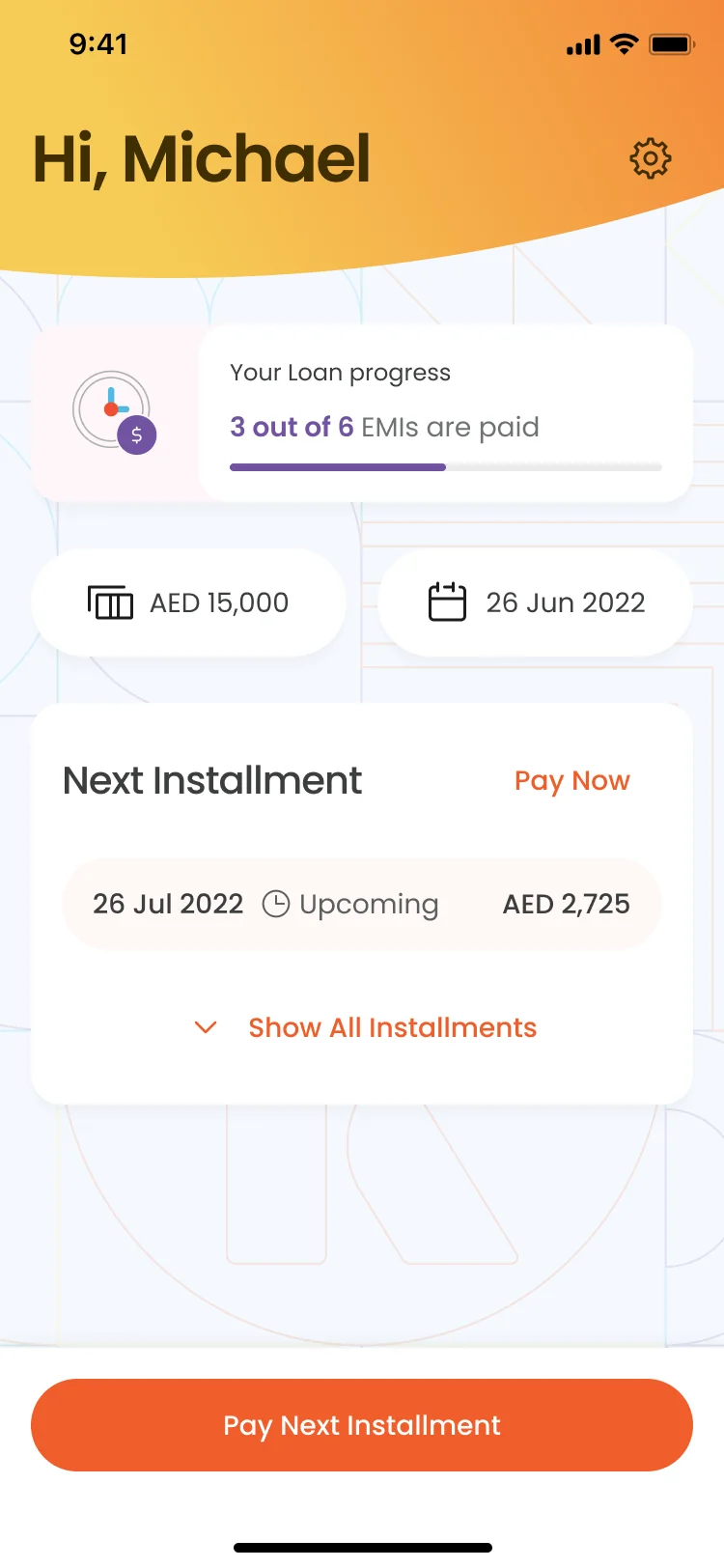
In the third iteration, I started fine-tuning some elements like the app header, how the content is displayed on smaller devices, and how the credit scores with the loan limits are displayed.
The newly created header was more accessible in terms of color, and the shape of it was part of a circle that’s incorporated with a loading animation of the logo. I fine-tuned this animation later on Adobe After Effects and exported it as a Lottie animation to be easily added into the codebase.
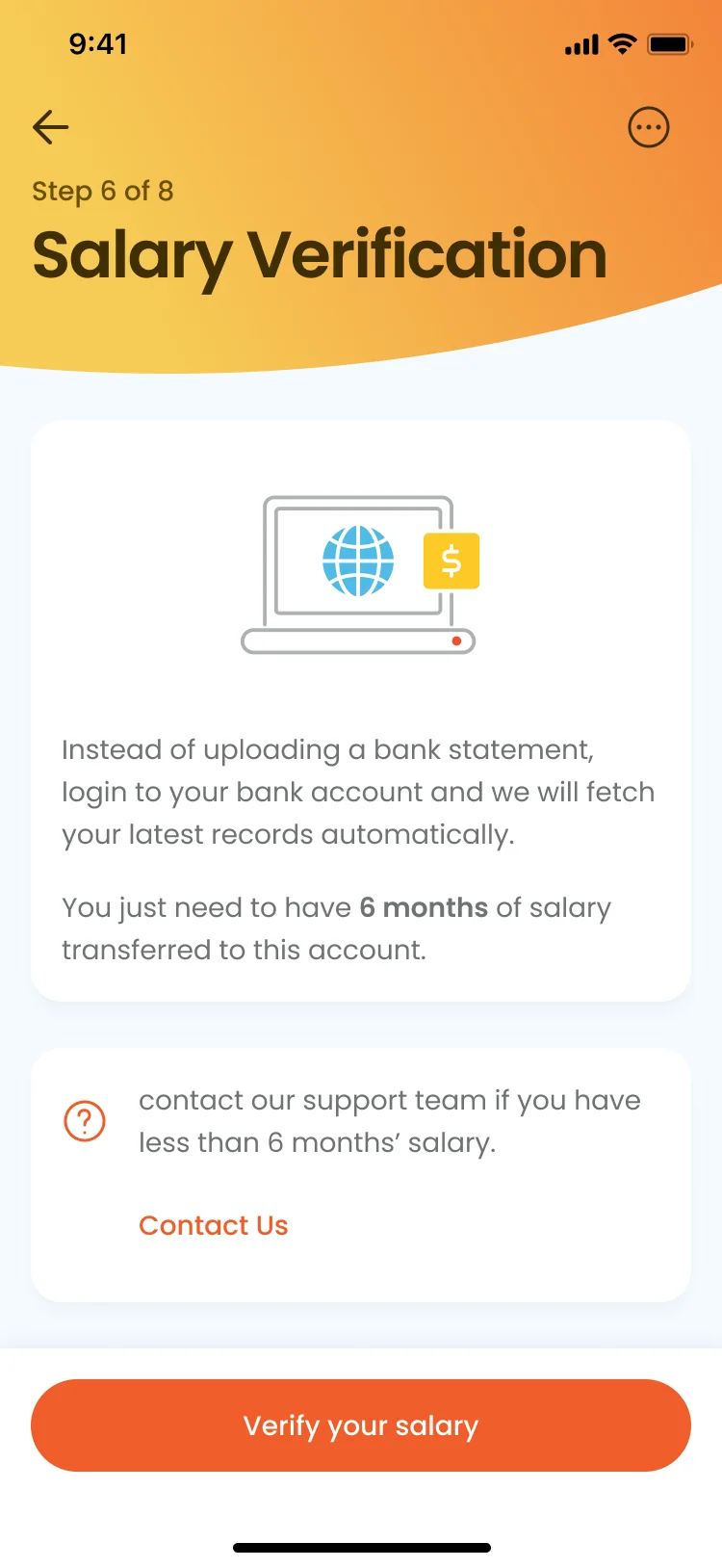
Usability testing
In the third iteration, there were 2 ideas for the registration that I wanted to test.
The first one was a sequential flow that just collects all the information at the beginning before allowing the user to apply for any loans. The benefit of this way is that we utilize our machine learning model for the alternative score and train it for the new market. But the drawback is that it makes the steps before a user gets access to the money longer.
The second flow was split onto 2 parts. First, we collect the essential information to give the user access to a loan but it will be a very small amount. Then we prompt the user to complete their profile to unlock their full limit. The benefit of this is to have fewer steps before the user has access to a loan, even though it’s a small amount. But the drawback is that there will be a percentage of users that don’t complete their profile and don’t utilize the alternative credit score which is our whole competitive edge over traditional banking. (2nd flow link)
After testing with potential customers from within our target market. It was clear that the second prototype is more favored among the participants because it gave them a sense of control over the amount of information they want to provide to get a loan. Also, it gives them more assurance that they can continue their registration process at their own pace, even though we always save the users’ progress in both scenarios. So it was worth the challenge to onboard the users first, then convince them to complete their profile afterward.
Tools that I used: Google forms, Reddit, Google Meet, Lookback
Analytics
For analytics, we used Segment to create multiple custom events then we passed those events to amplitude to create a funnel for the whole registration flow and loan applying process. This way we were able to see if any of the steps has an alarming drop rate. Also, measure and optimize the conversion rate of our key elements like successfully applying for a loan.
Product discovery process
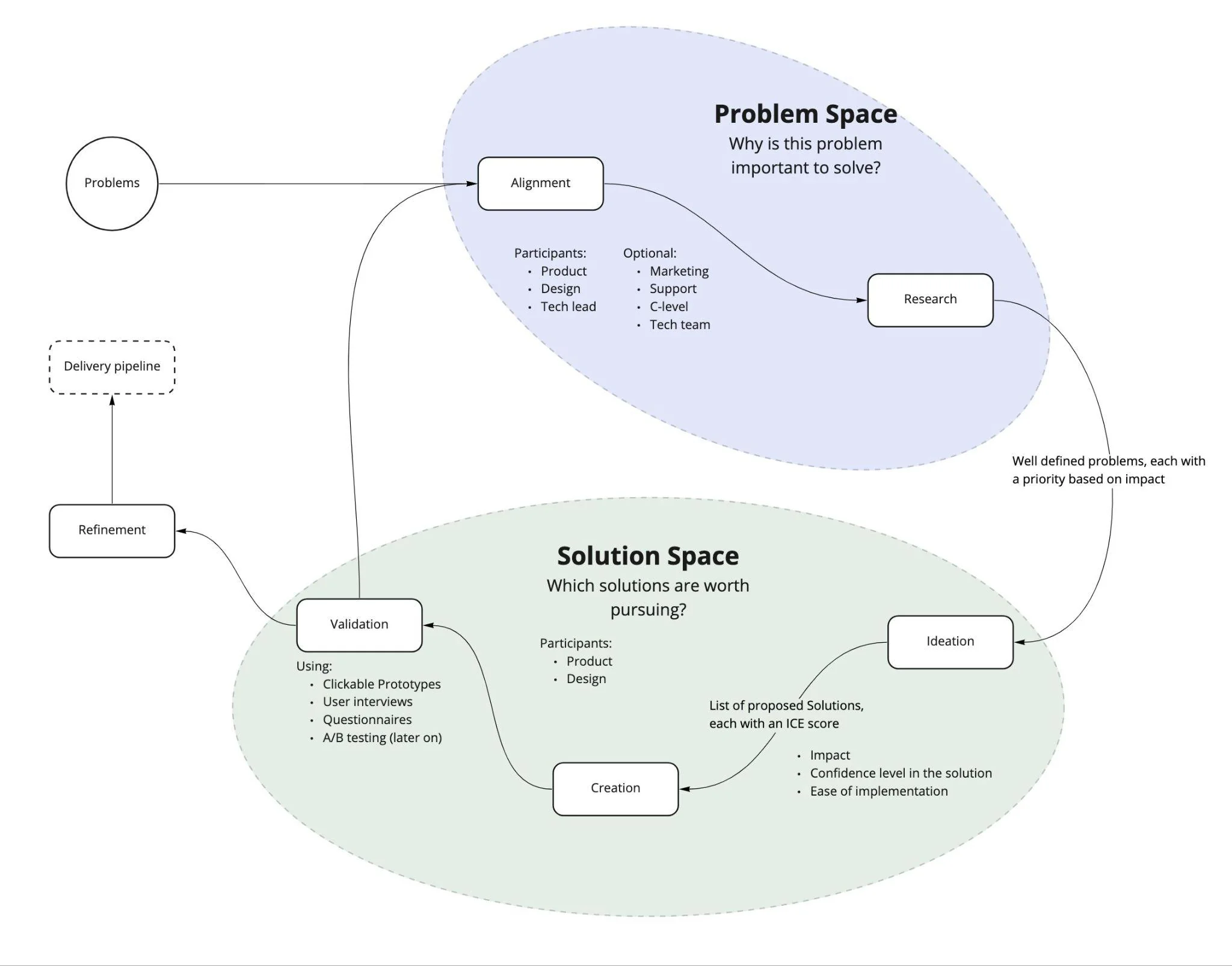
I worked closely with both the development team through design review sessions and handoffs. And I also worked very closely with the product team to scope, prioritize, and write user stories sometimes. So I was tasked by the VP of product to find or create a product discovery process.
After some research, I found a very nice guide by Tim Herbig which I adopted and slightly adjusted his process to fit our workflow. And we followed it to tackle the problem of having a long registration flow.
Figma sources
The app, including all iterations - The design system
Back to projects