The Purpl Wallet
- Role
-
- Product designer - only designer on the team
- Timeline
-
- 2023 to now
- Worked with
-
- The co-founders
- Partnerships team
- Engineering
- Tools
-
- Figma
- FigJam
Where it started
When I first joined Purpl in Nov 2022 as the only designer on the team, there was already an MVP in place, which allowed me to gather feedback from beta users very quickly. The launch version was very straightforward: you receive a transaction from Paysend or Remitly, you verify your account once, and then cash out the transaction from any ATM that belongs to our partner bank. This was very similar to the other competitors in the remittance business. The main difference was the digital KYC and the ATM cash-out, besides the business model that promises free cash-out (other competitors’ cash-out fees were at least 1%).
The $2,000 problem
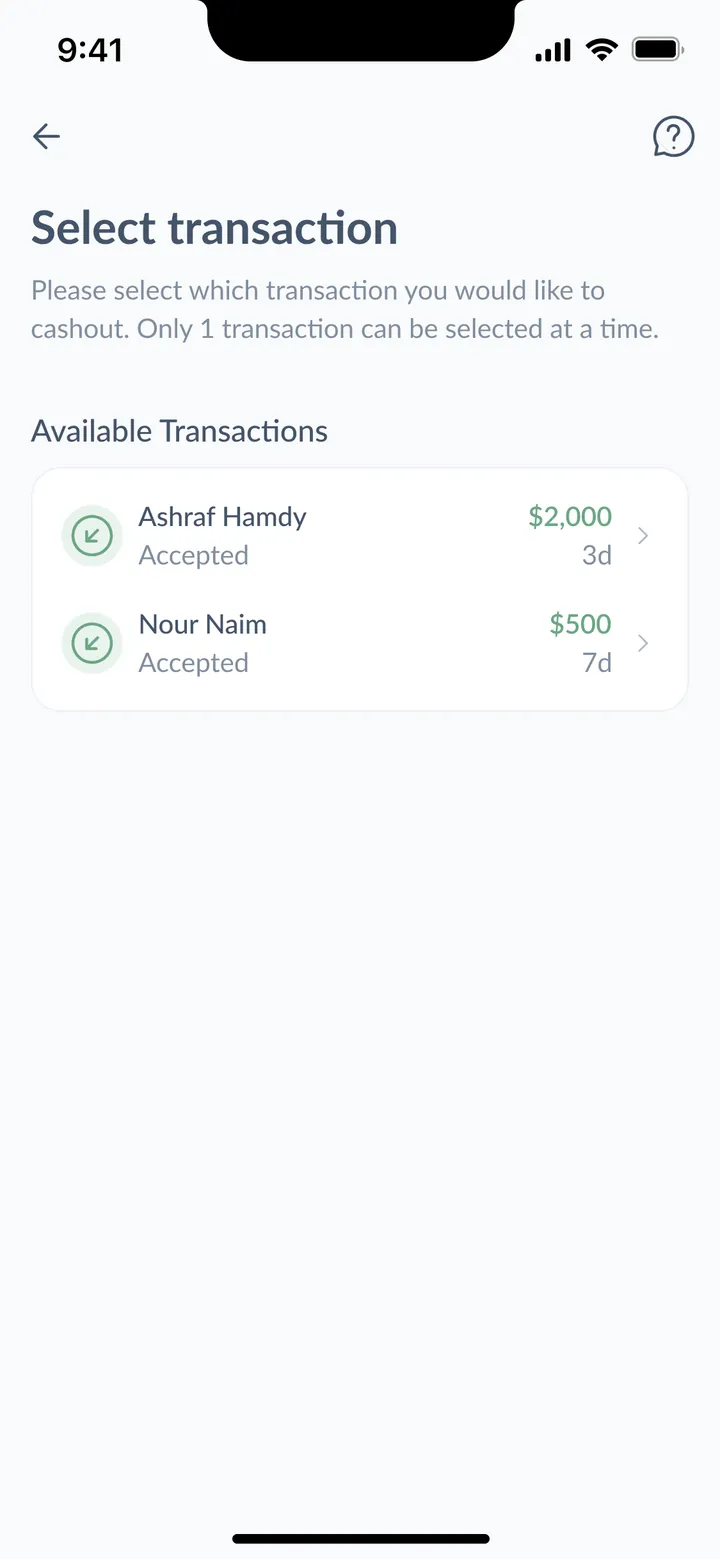
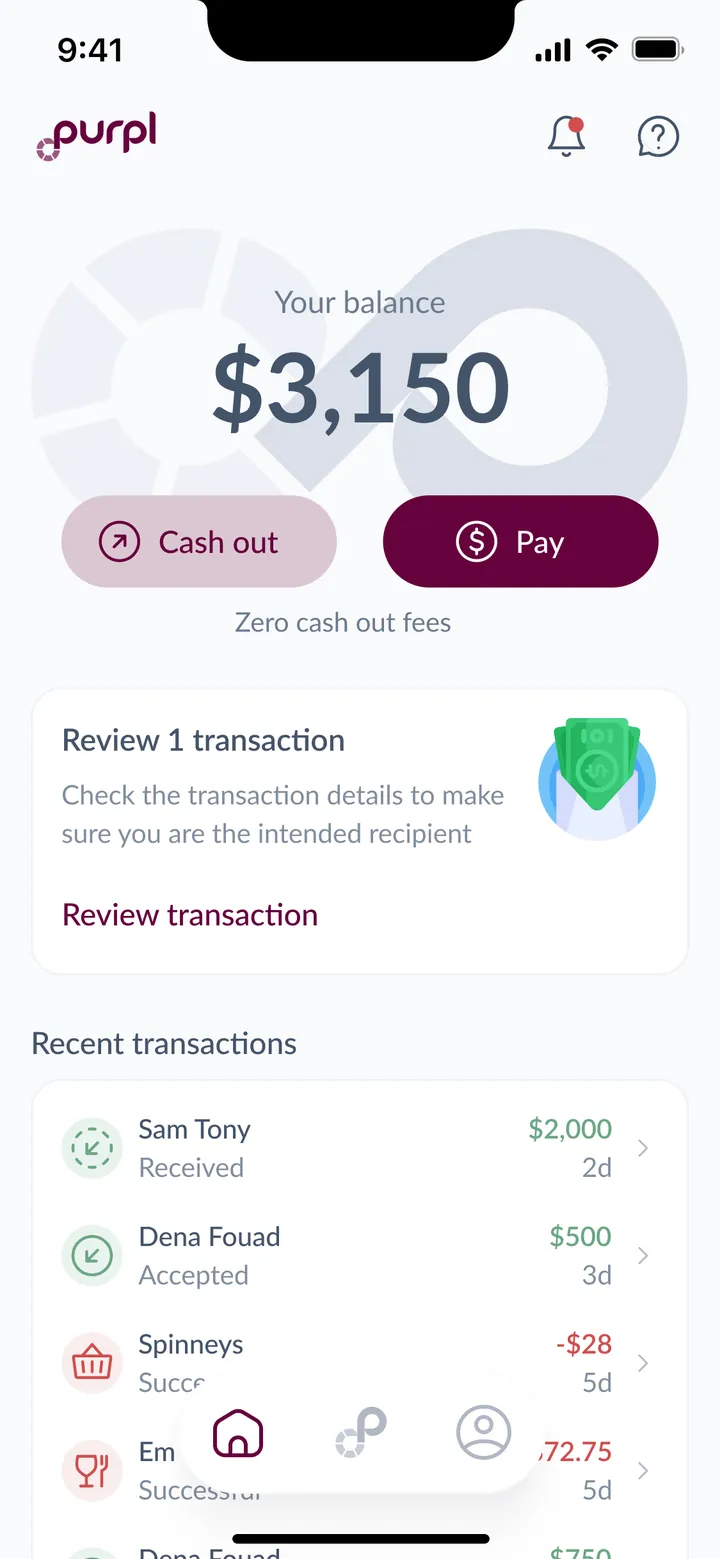
But soon after launch, we realized that many users received big amounts, like $2,000, which is the upper limit per transaction, since the ATM can’t disburse more than $2,000 at once. And this caused a few issues. If the ATM didn’t have enough cash to cover the full $2,000, the user was stuck and had to find another ATM, and others were uncomfortable cashing out the full big amount, especially if the ATM was on the street at night.
One wallet
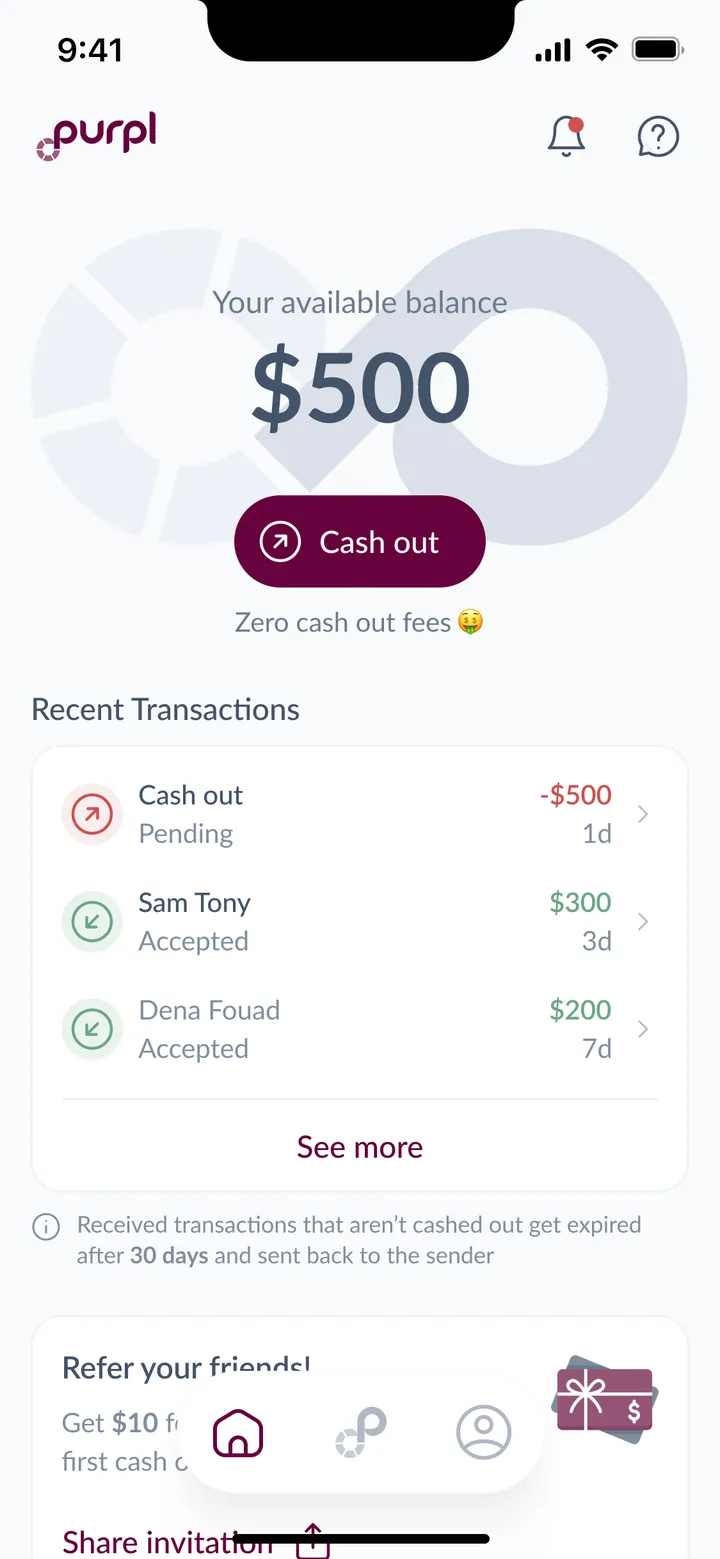
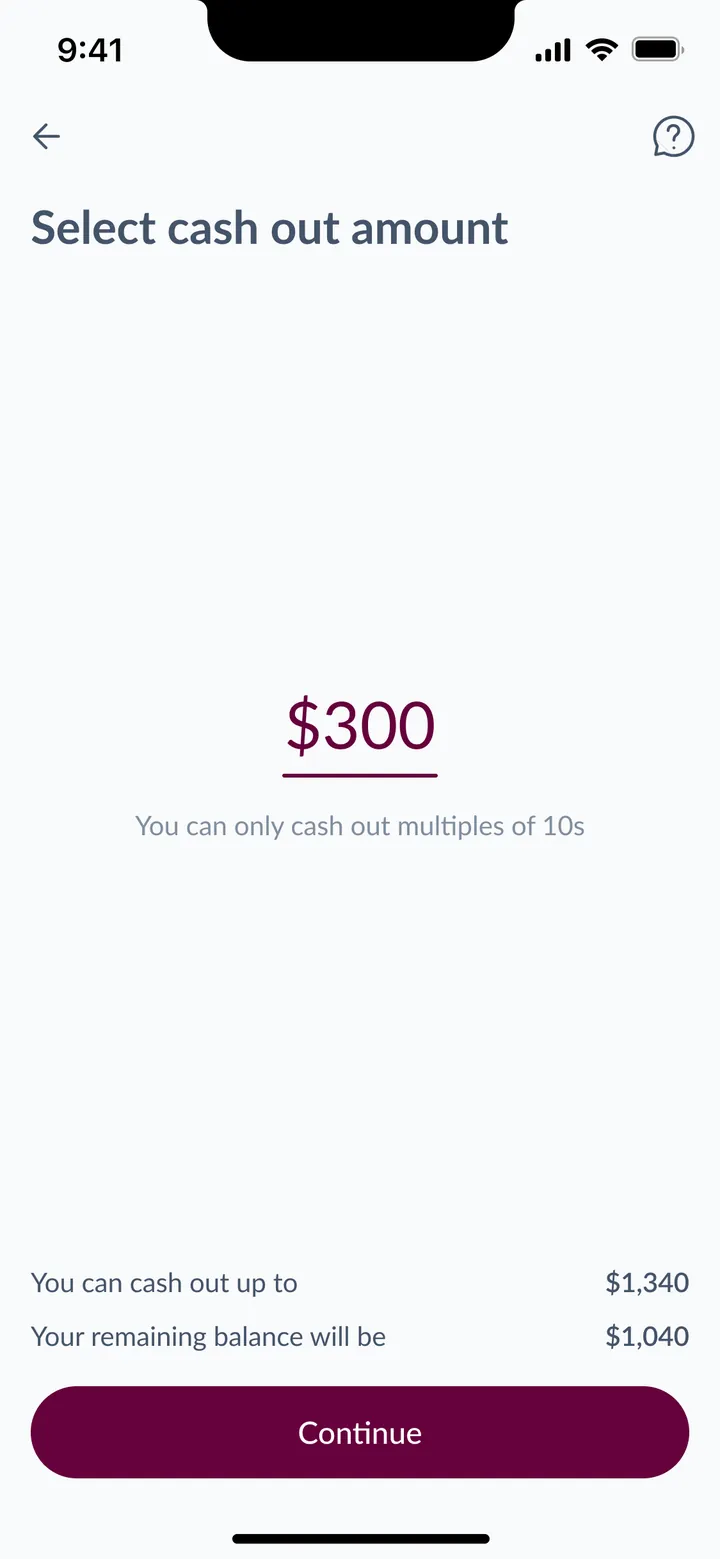
So we quickly had to deviate from the competition, and I proposed that we utilize the digital wallet license that we acquired from the Central Bank of Lebanon at launch. The idea was simple: users deposit the funds into their wallet first, then cash out any partial amount they need. This solved both problems: users could keep the bulk of their money in the wallet and cash out only when they needed to, and they didn’t have to worry about an ATM not having enough cash, since they could always try a smaller amount.
Unifying the commercials
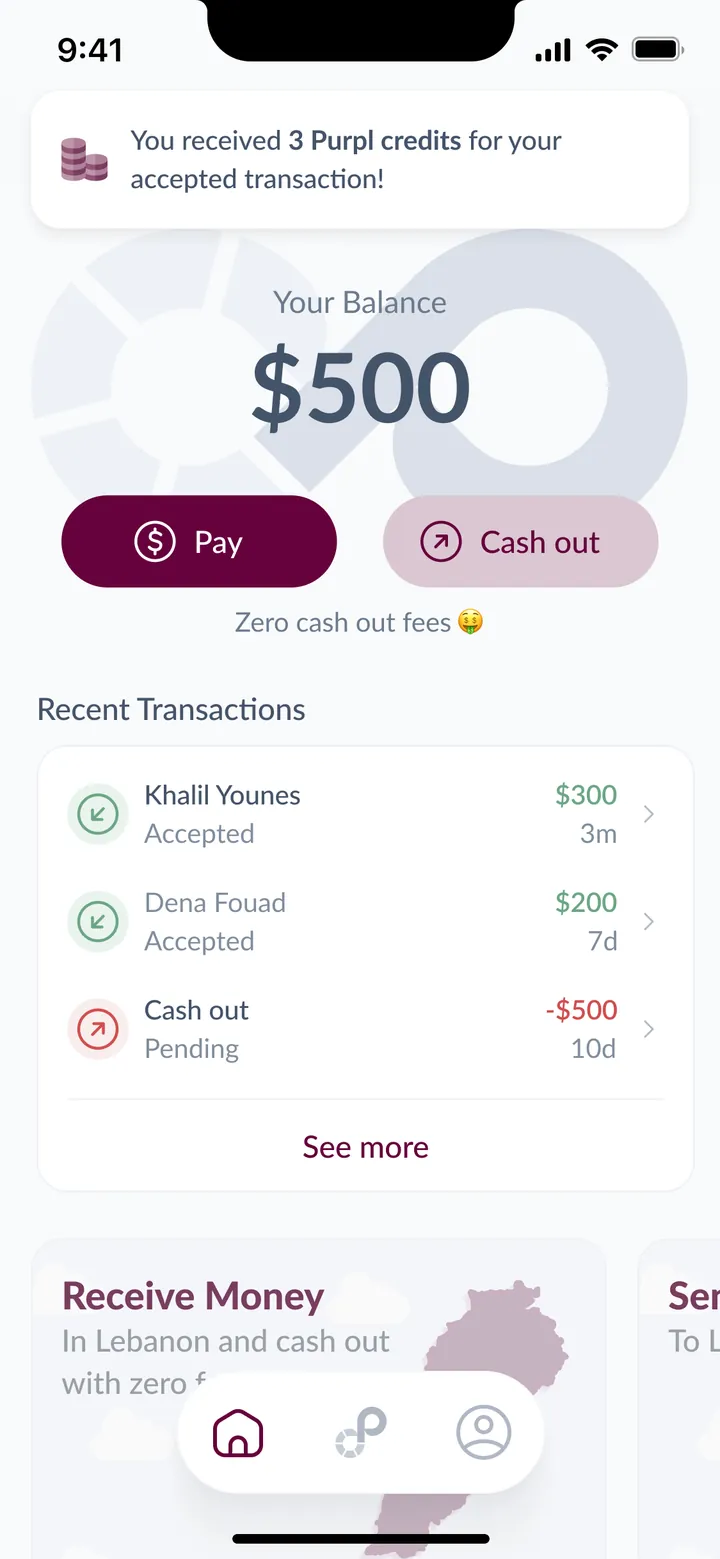
But one major challenge to make this model a reality was that we had to figure out a way to unify the commercials of different partners. That way, a dollar from partner A deposited into the wallet would be the same as a dollar from partner B, since they’d be mixed in the same pool. One user could receive multiple transactions from multiple partners, combine them, and cash them out at once.
This was a huge challenge because the commercials did not perfectly align like this at the beginning. I had to do a lot of studies and a lot of convincing with the co-founders and the partnerships team, and show them, with data and prototypes of each model, how all the other options would either make the product experience complicated, or hurt the main value proposition of promising the free cash-out. But after numerous meetings and negotiations, I was able to convince the team of this vision: one wallet, unify the commercials of all inflows, give the users the flexibility to cash out whatever amount, whenever they need it.
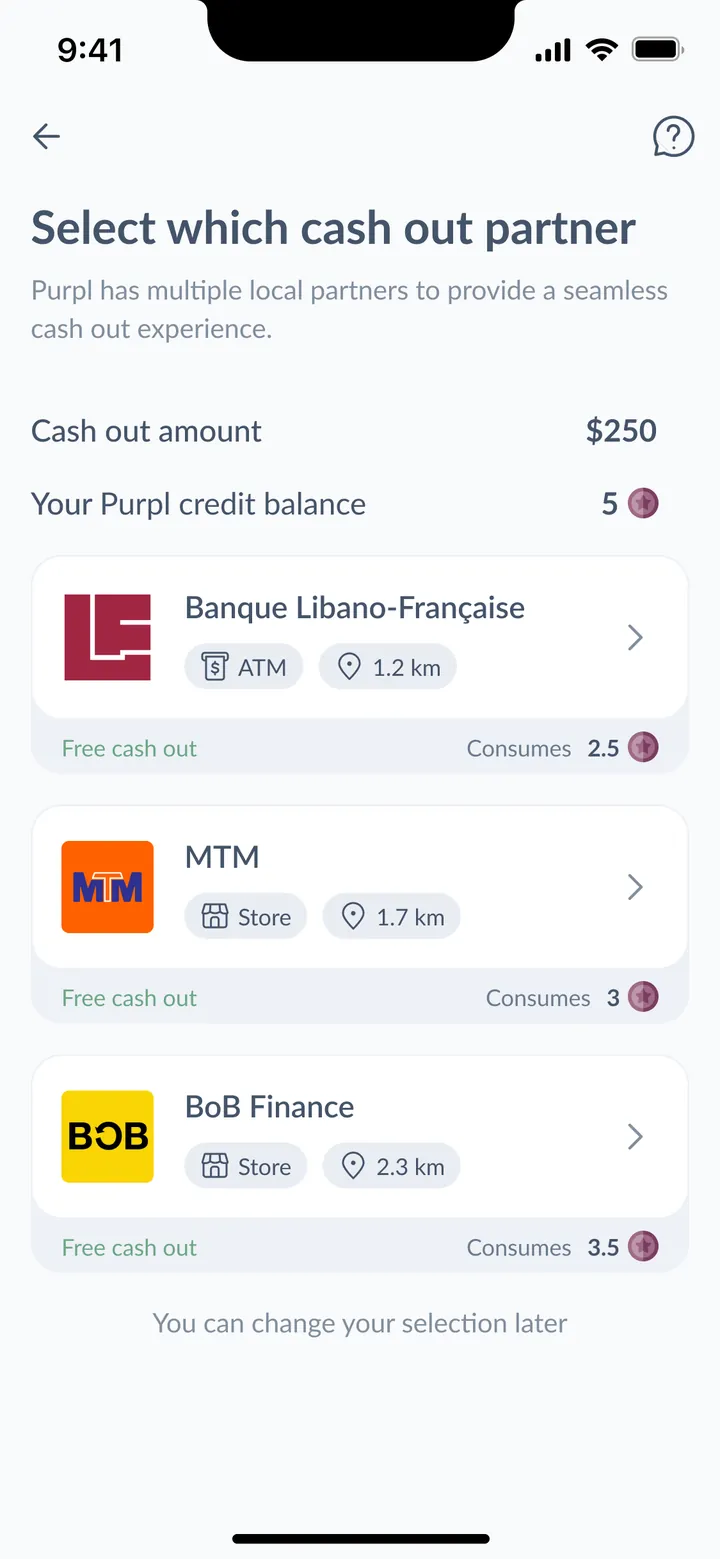
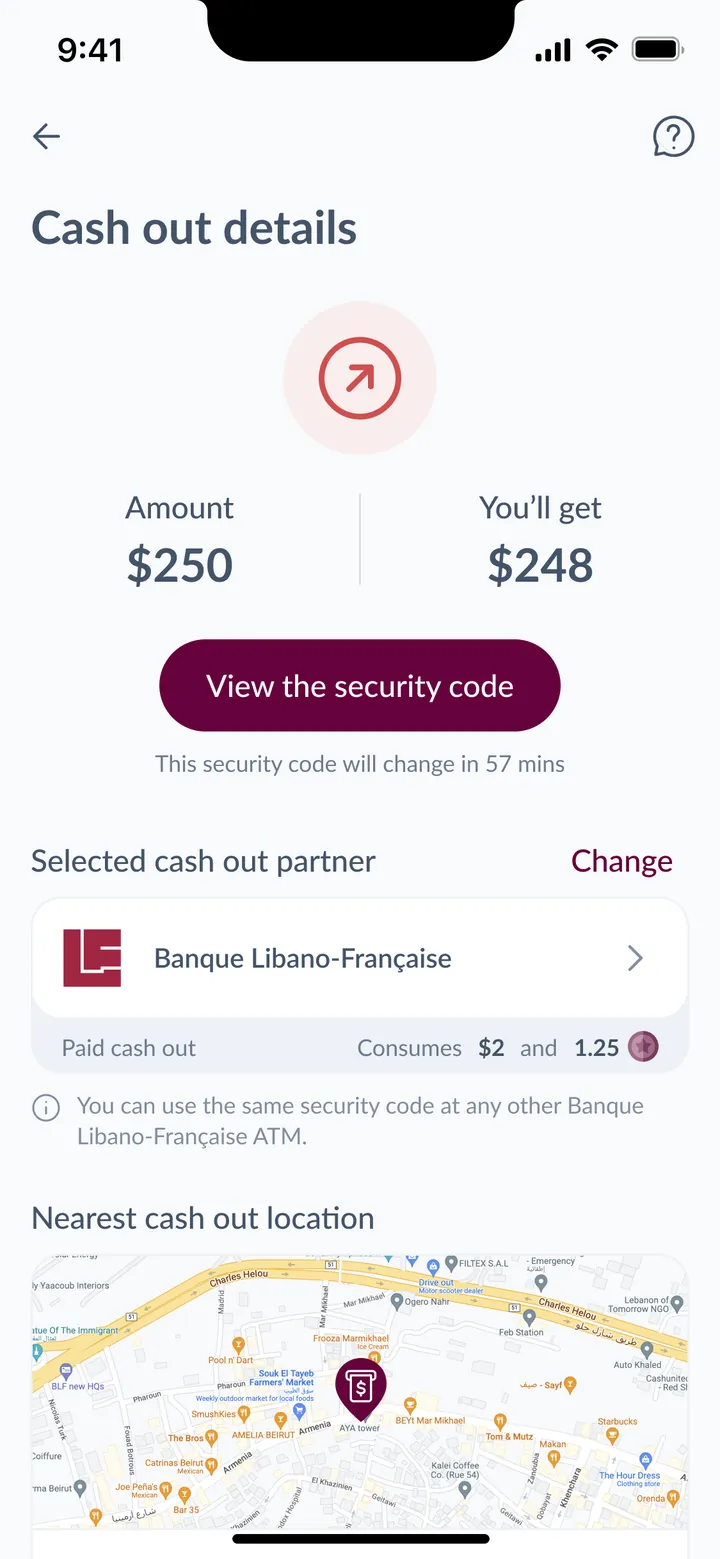
For example, one of the models that was explored was having “free cash-out” credits, where users consume those credits to cash out, and if those credits run out, they pay for the cash-out. It was a way to show the different stakeholders how the current commercials would hurt the experience and make the app more complicated to use, when compared to the unified inflows model.
What changed
It took some heavy lifting from the partnerships team and some time, of course, but it was worth it. We saw from the data immediately that users started splitting big transactions into multiple smaller ones, and users started leaving money in their wallet, while previously it was impossible. This also gave many users access to change, which was in short supply in Lebanon back then, since they could cash out $90, for example.
Some users even combined several transactions and cashed them at once to make a single trip to the ATM, so that level of convenience felt like a breath of fresh air to the users, and I was very proud of all the effort and convincing it took me to drive this forward. At that time, there wasn’t any other remittance business in Lebanon that offered this flexibility.
The suggested ATM
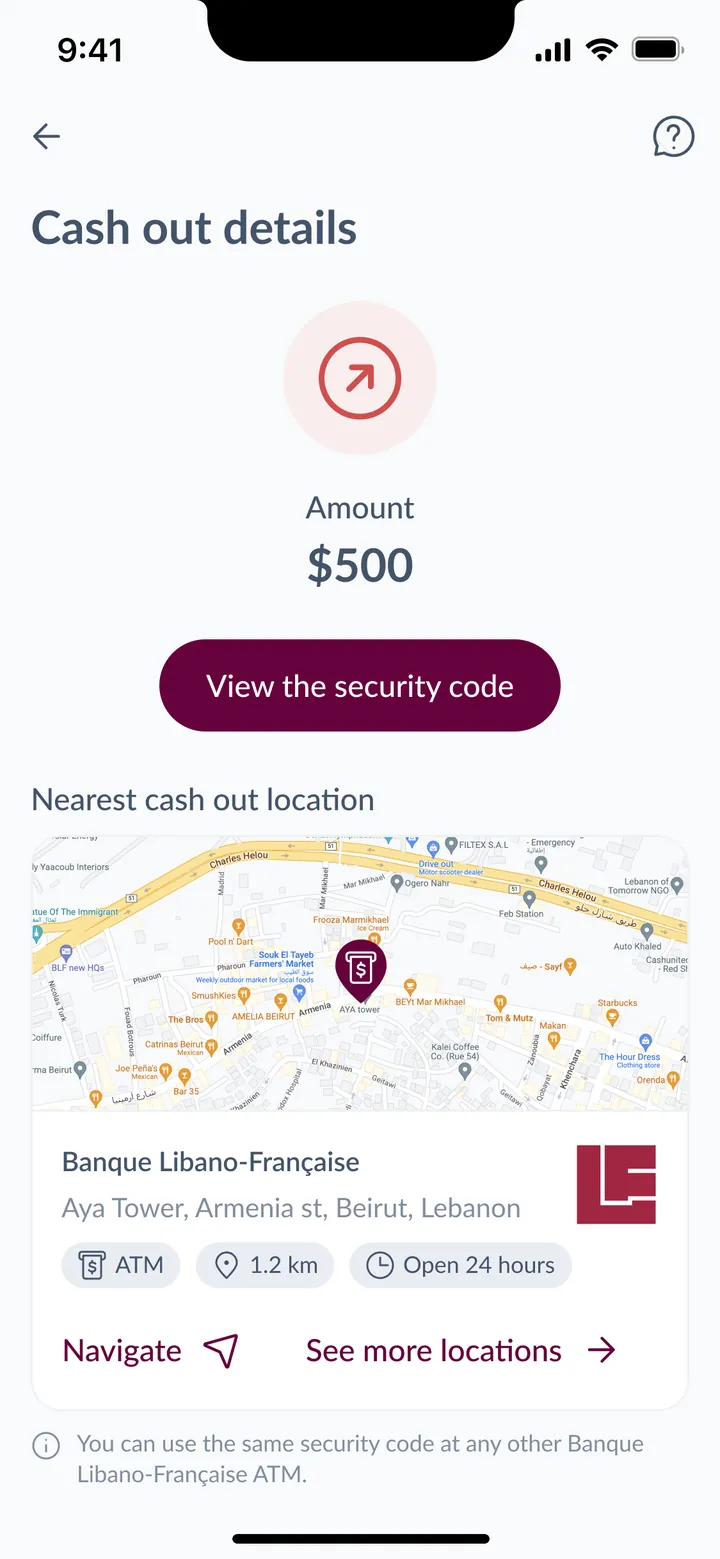
In that MVP, users were also asked to choose which ATM to cash out from before creating each request. I had a hypothesis that we could remove this step and automatically suggest the nearest ATM location on request, so the flow is just a click of a button, then entering which amount you need, then you can cash out right away.
I confirmed this hypothesis by doing some user interviews with our top users back then, and by checking the average number of locations each user had tried. Both confirmed that, on average, users settle on 1 or 2 locations once they get used to the service and don’t change them much. Usually those ATM locations are near their house, their work, or on their way to a weekly drive they do.
What also helped this decision is that the same cash out request can be used at any of the ATMs within the network, and the location displayed is only informative and doesn’t affect the process in any way. So a user can create a cash out request at location A, but then change their mind and go to location B, and it will work normally.
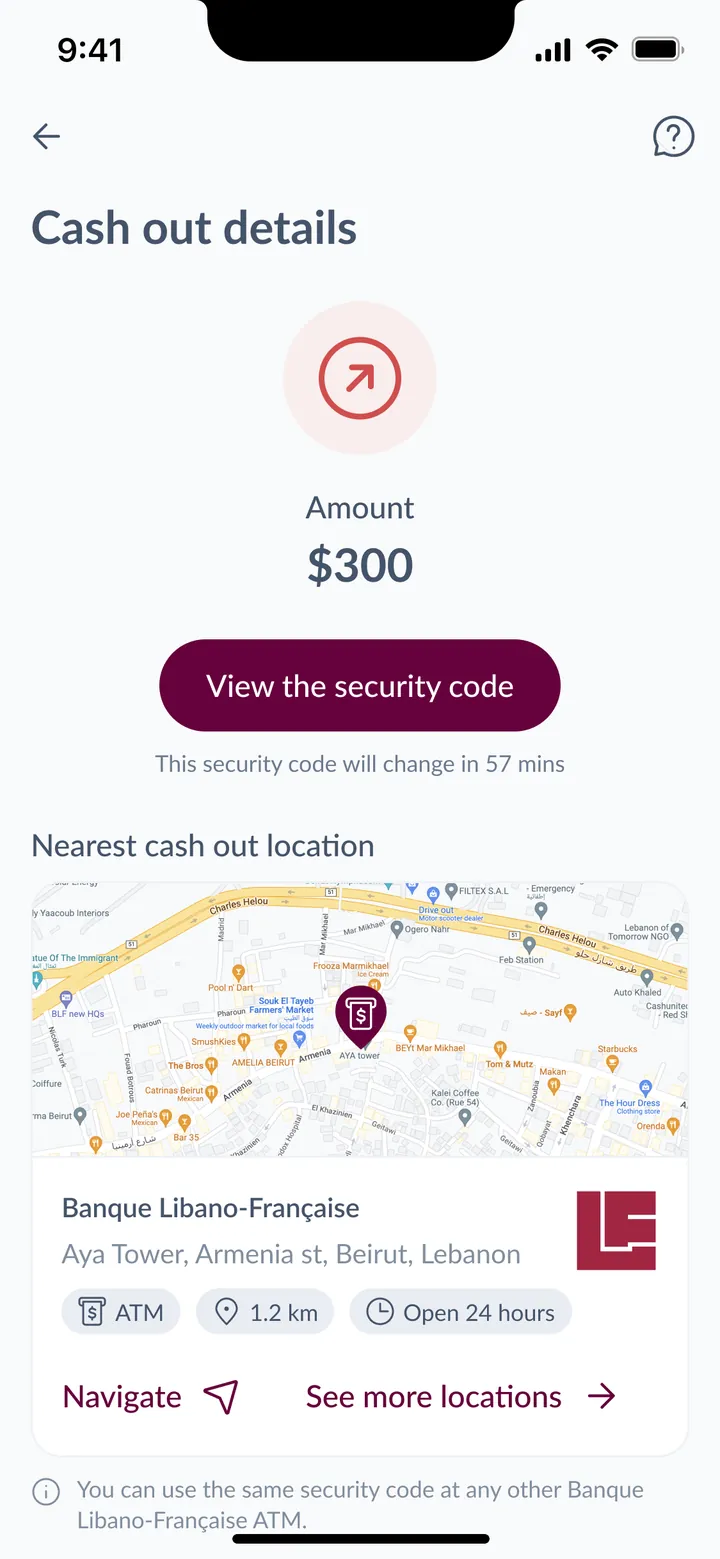
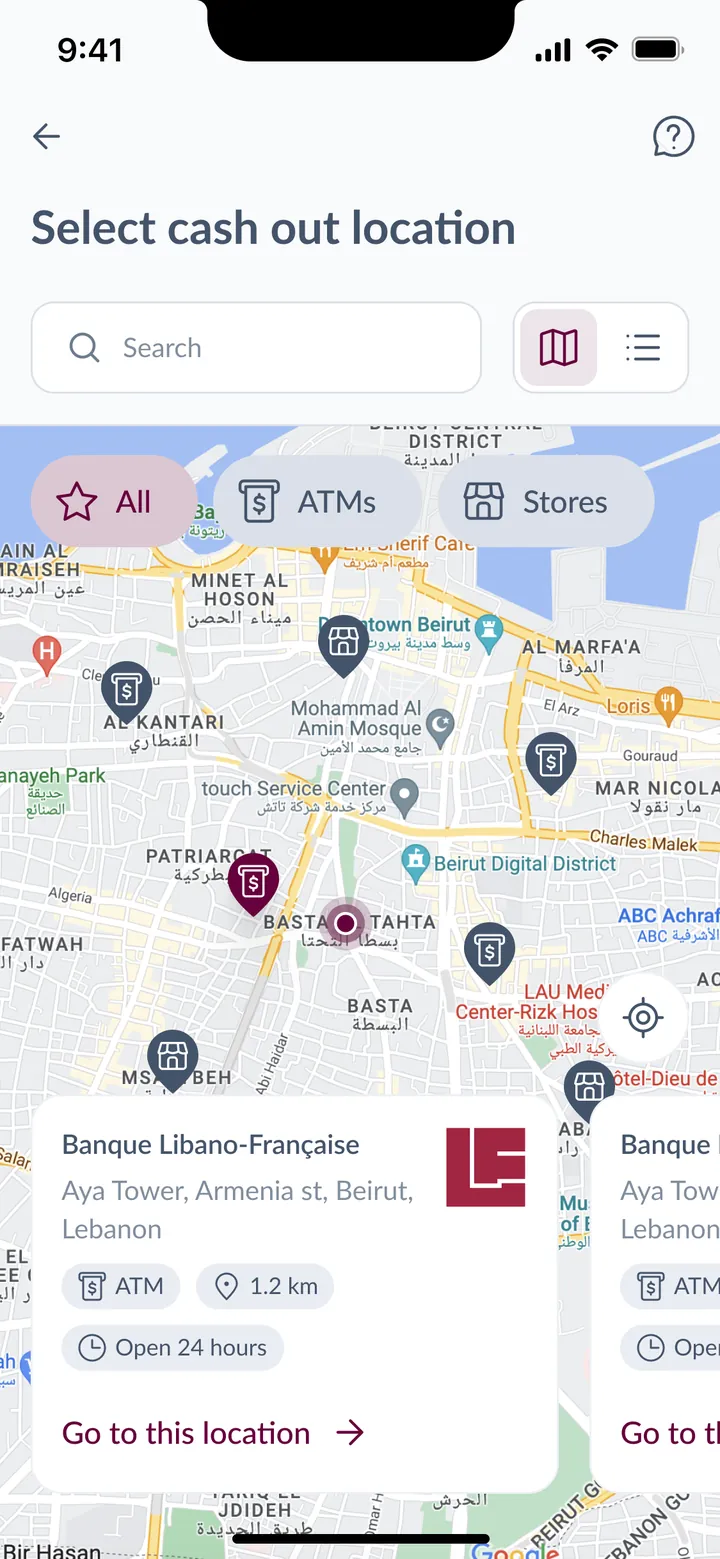
But even with that in mind, after we shipped the location enhancement, more than 85% of the cash-outs were from the suggested location on the app, and more than 90% in 2026. This fits the initial hypothesis and shows that people rarely change their preferred locations after they get used to them.
Paying without cash
After shipping the partial cash out, our strategy started shifting towards enabling our users to pay for their expenses without necessarily needing to cash out. Because at the end of the day, the person who receives funds from abroad gets those funds to cover their expenses: rent, groceries, gas, etc. If we manage to allow them to pay for their needs without cash, it becomes a win-win situation for both parties. It becomes more convenient for them to pay their rent via P2P or fuel up their car by paying through their phone directly, and it’s also operationally cheaper for us (and the merchants) to break the cash dependency cycle.
USD cash is limited in Lebanon since the country can’t print it, so the cost of cash totally depends on the demand and supply dynamics of the market. As a consumer, I’m not interested in buying the cash itself, I only want to buy the end products or services, so it doesn’t make sense to take the burden of paying for the cost of cash when the USD bills themselves are not the end product I’m interested in.
So from that direction, we started attacking different ways to let our users pay with Purpl directly. Cards are obviously the first choice that comes to mind, but the card product offering was not ready since it was highly dependent on our partner bank, which took some time to become a reality, unfortunately. But we started with other features that had fewer dependencies.
QR payments
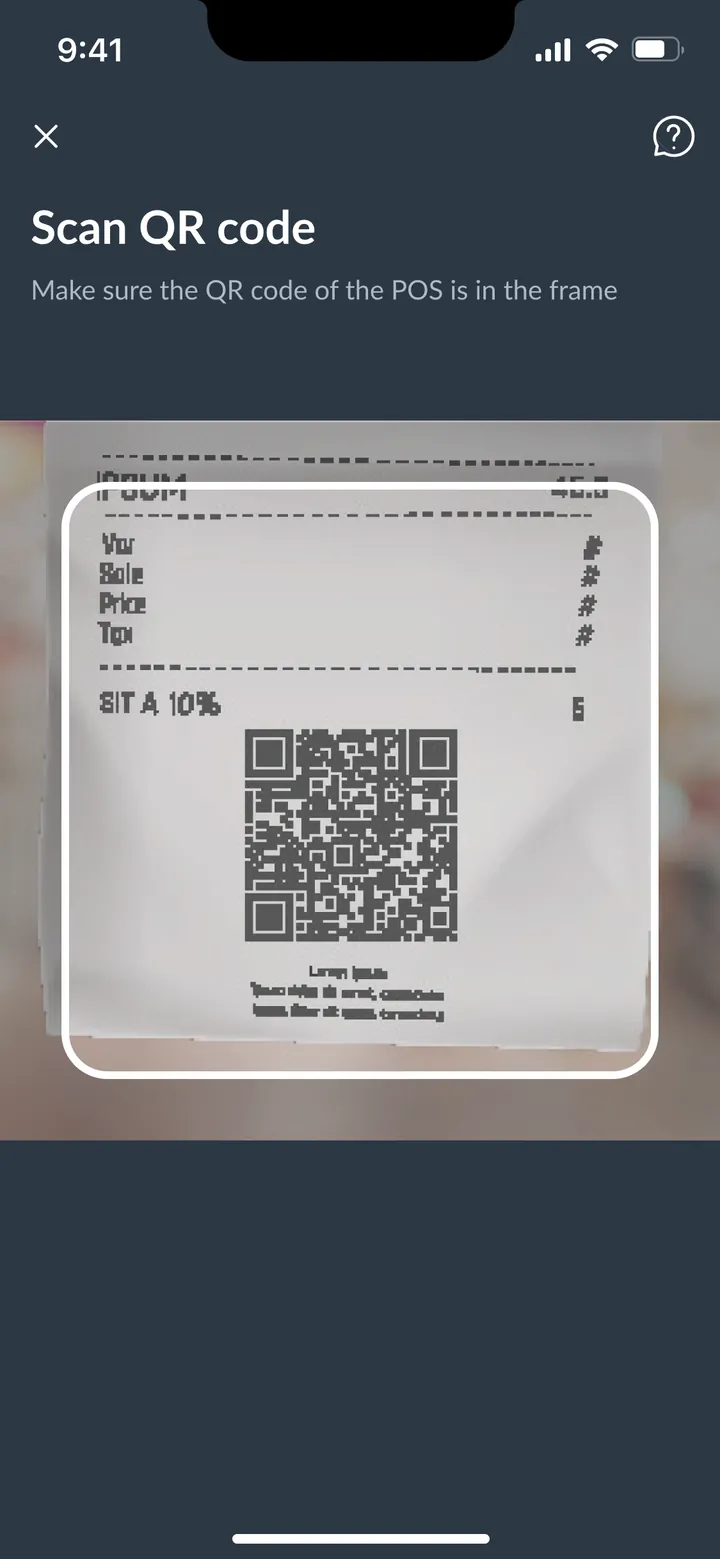
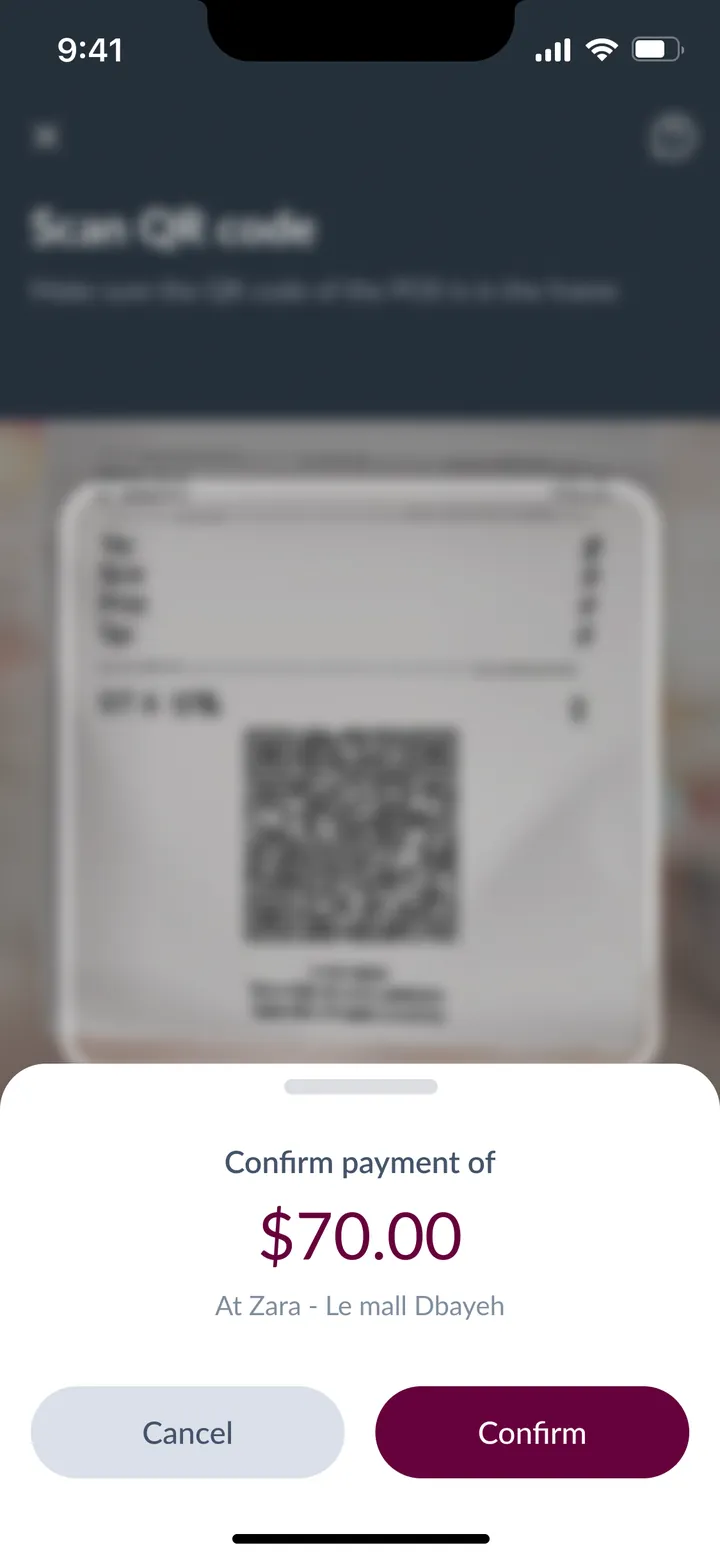
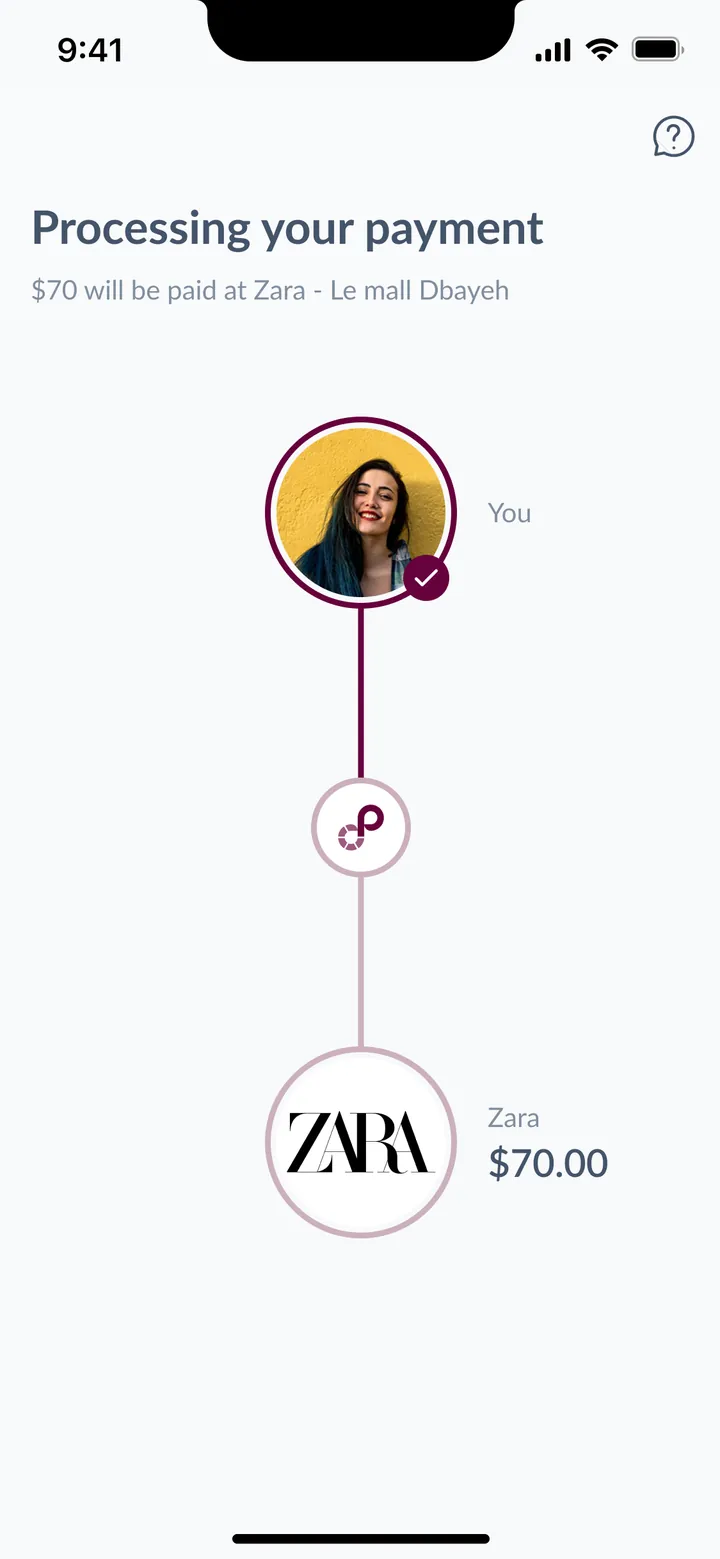
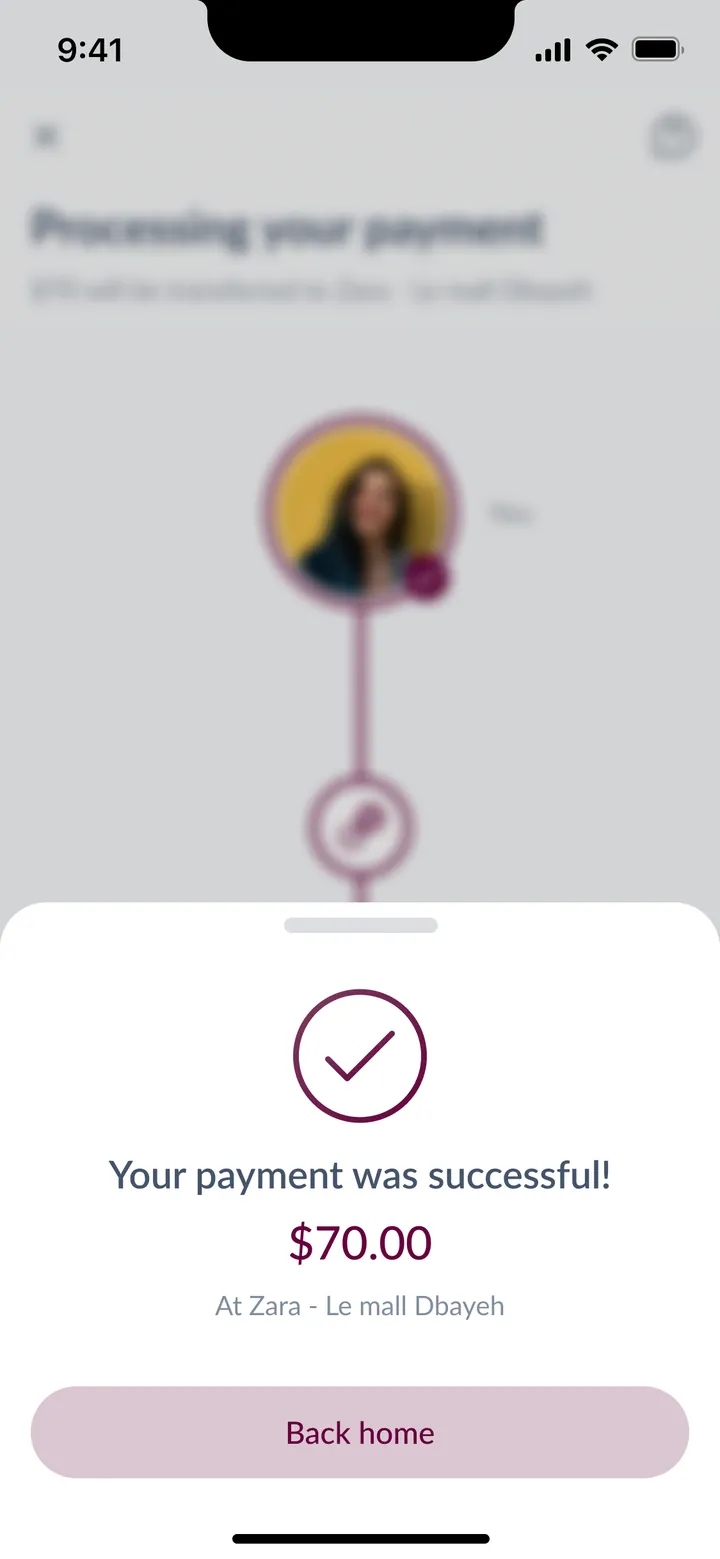
The first thing that got shipped was QR code payments, which were intended to act as a temporary solution until the cards arrived. I designed the flow to be as short as possible. The partner bank already has a network of POSs at several merchants, and those POSs can show a QR code that the Purpl app scans, confirms the payment, and then the funds go directly from the user account to the merchant account, making it operationally cheaper than even paying with a regular card.
But unfortunately, after launch, it didn’t gain much traction. The users were not incentivized enough to use it, and the merchants’ cashiers were not incentivized enough to educate or remind the users to try it. Many cashiers were not even trained enough to know how to use the QR code on the POS. It did work, though, when we did focused campaigns with a popular gas station chain with the right incentives on both sides.
So we learned that changing people’s payment habits is much harder than we expected. The new way has to be significantly better than the old way for people to convert, either miles better in convenience or in financial gain (incentives, promotions, etc.).
Peer-to-peer
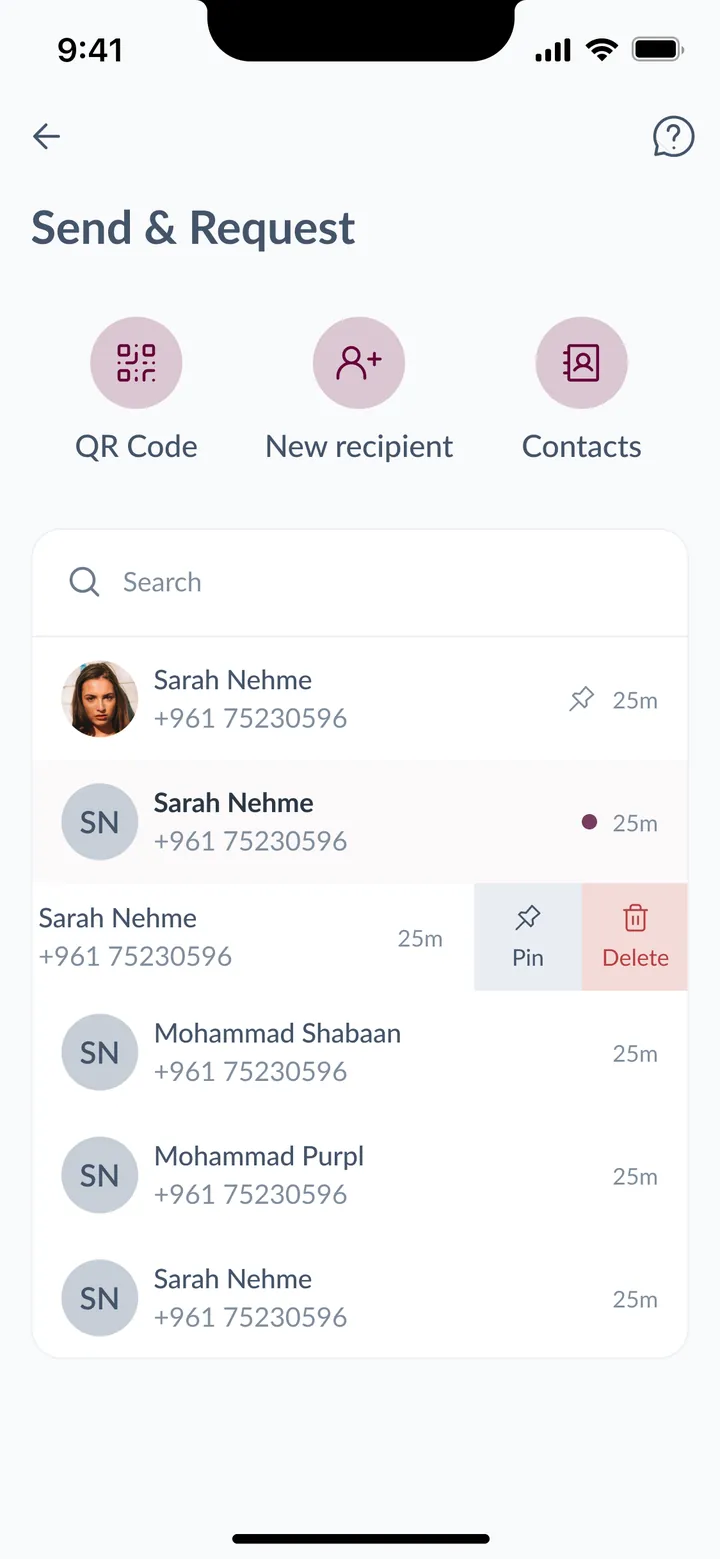
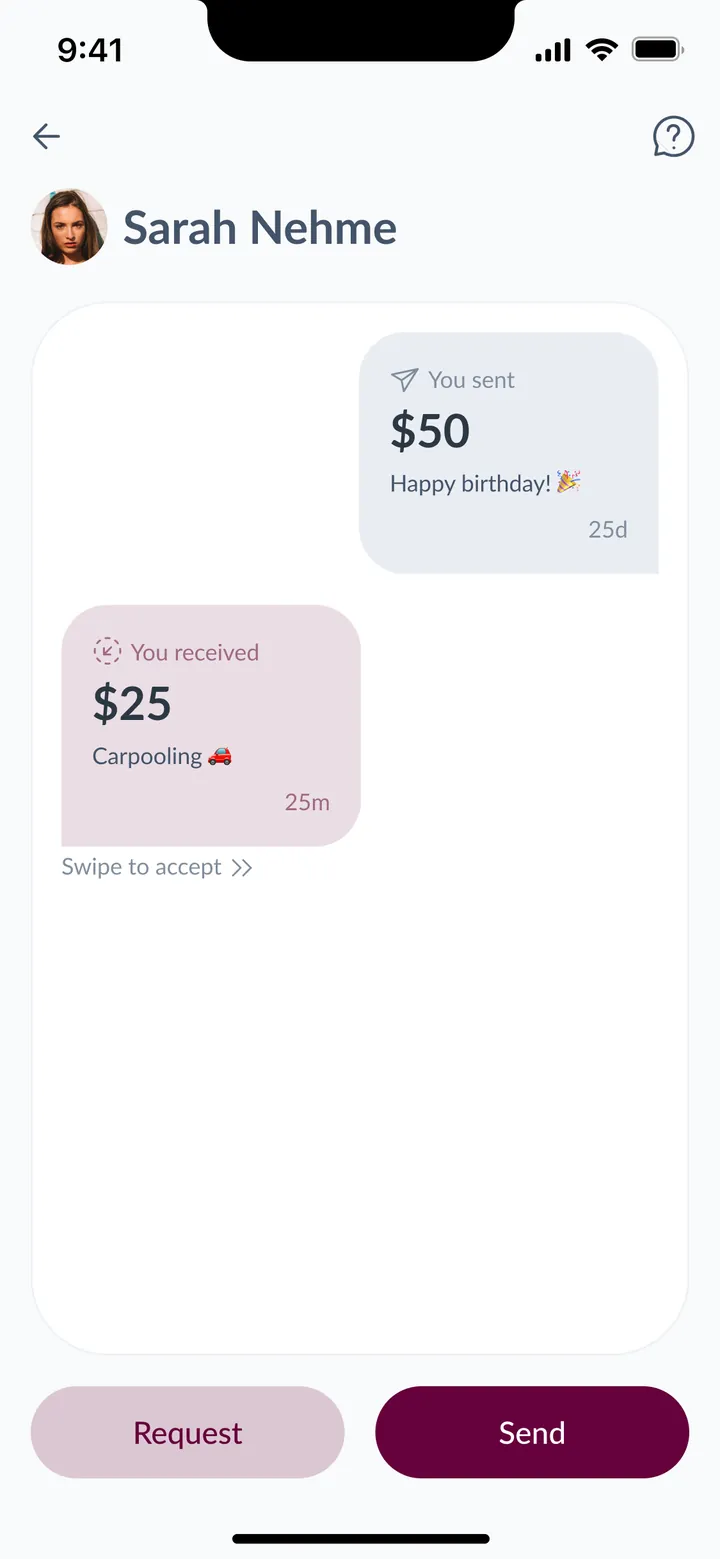
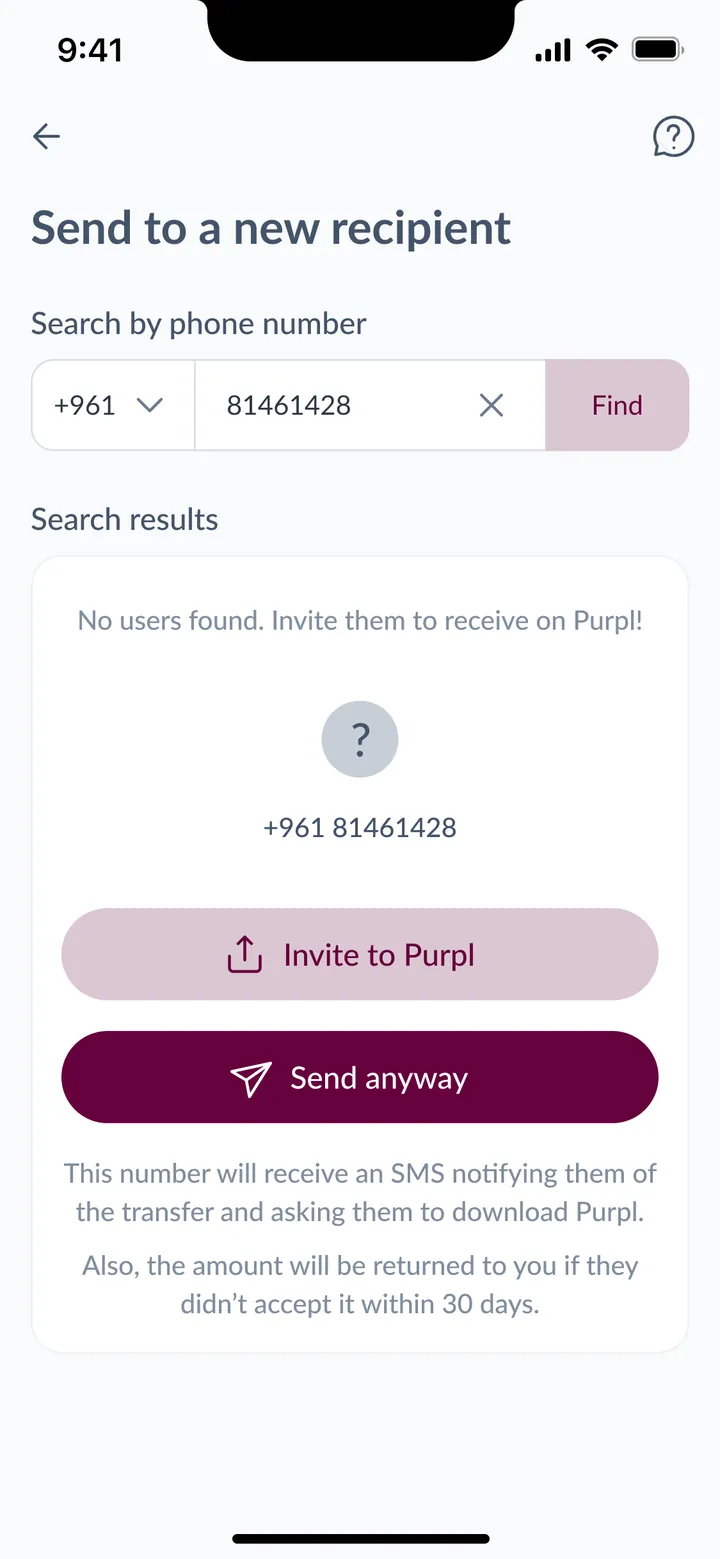
Next, we added peer-to-peer sending for free. I designed it as a conversation with each contact, and I pushed for the option to send to non-registered users from day one to add a bit of product-led growth. Once it went live, it started gaining some traction, and user adoption grew steadily. But the local transfers market is very competitive. Being a fully digital experience didn’t help much because other competitors had hundreds of shops across the country, and non-tech-savvy people can just go to any of those shops to pick up a transfer without downloading an app or anything. I remember in one of the user interviews I ran after the P2P launch to get some feedback, one of the users said that he couldn’t use Purpl for local transfers because most of the local payments he makes are for non-tech-savvy people, like a car mechanic or a carpenter, so asking them to download an app and do a digital KYC just to receive their payment sounds ridiculous to them.
Vouchers
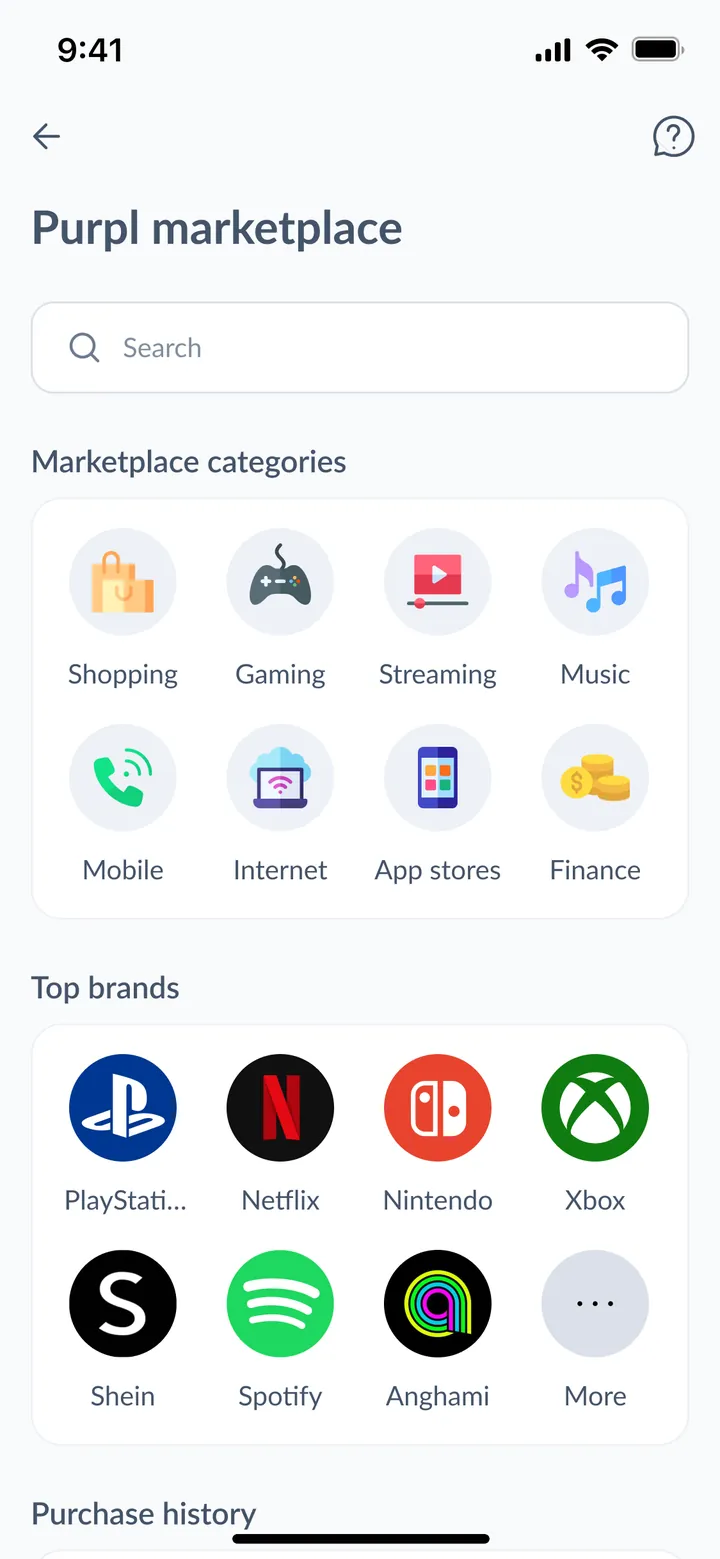
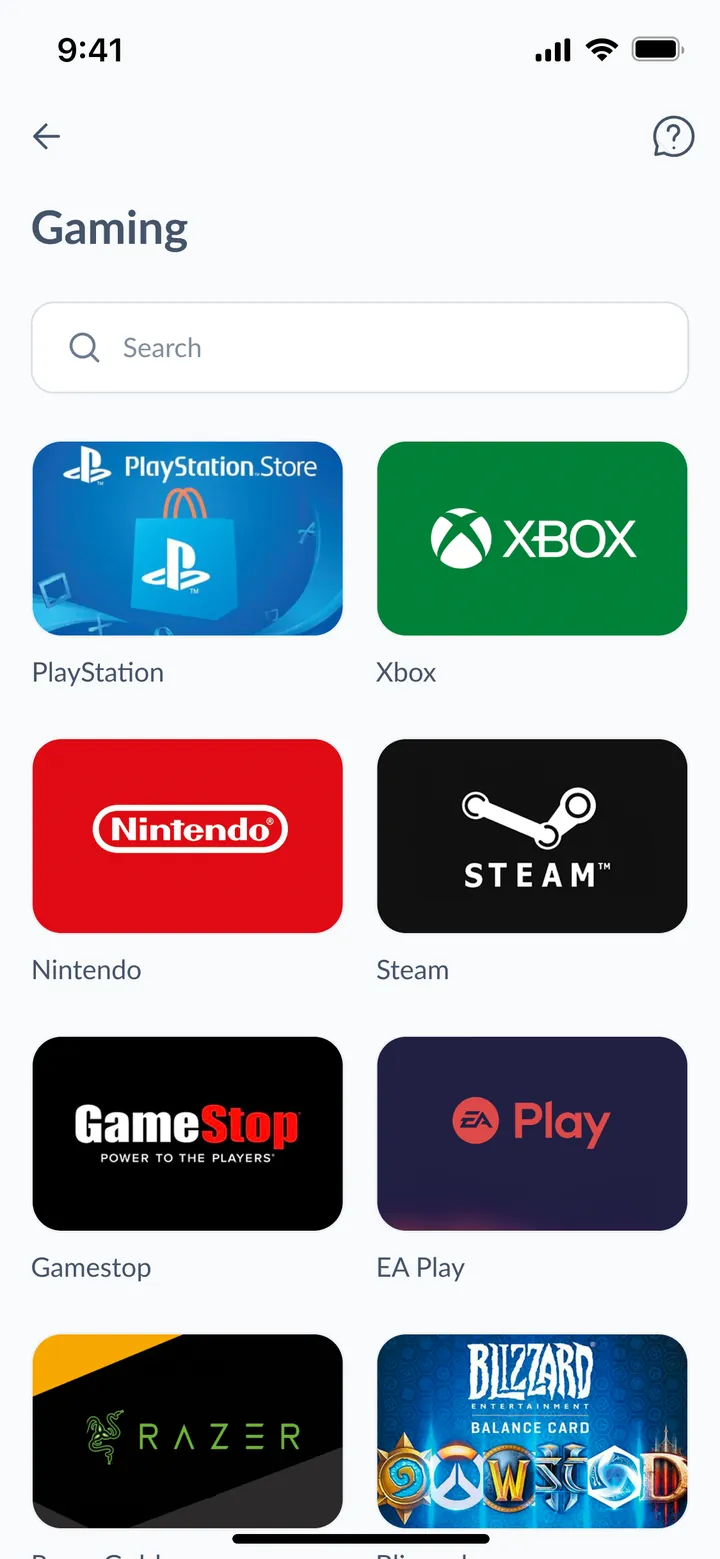
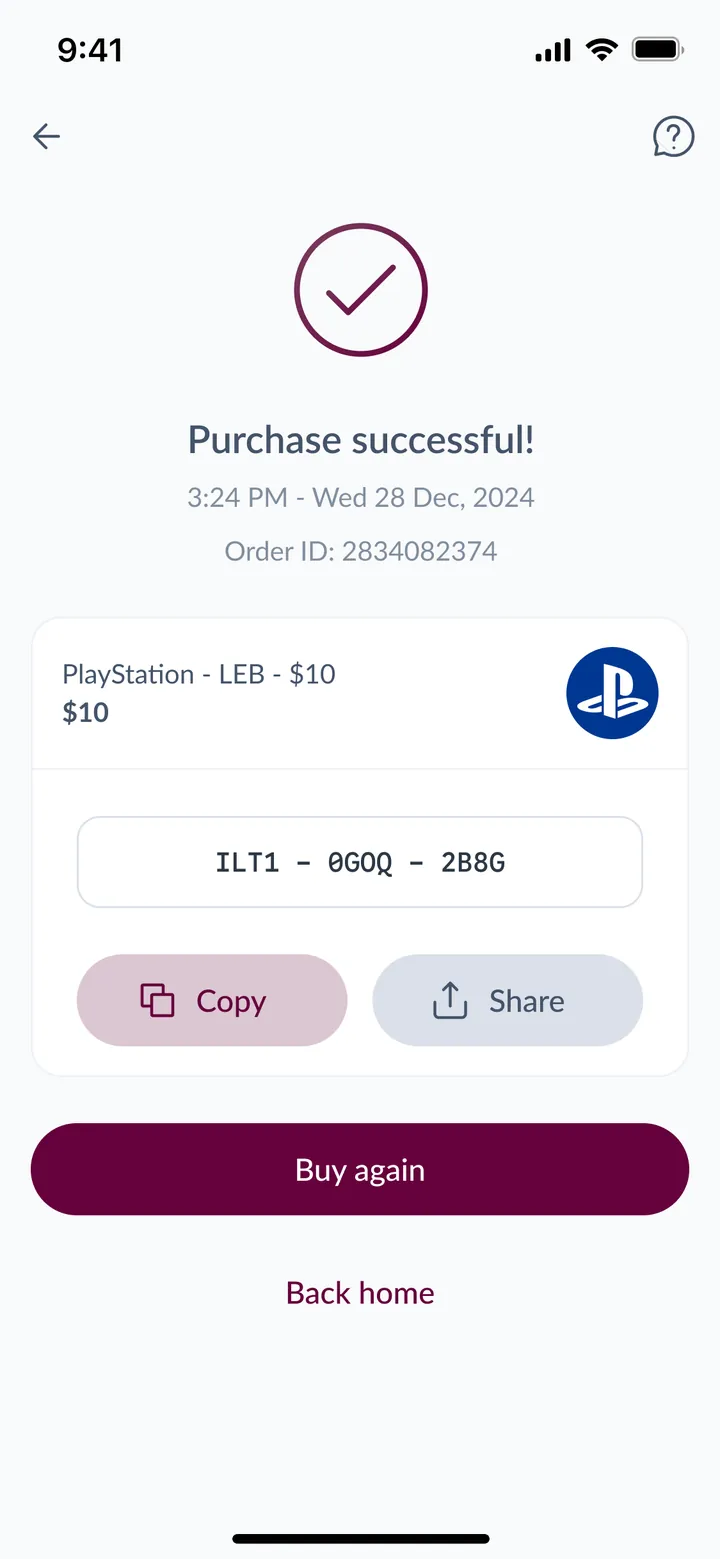
Then we added the vouchers marketplace, covering mobile, internet, entertainment, shopping, etc. At that time, one competitor was way ahead of us in terms of their voucher offering, and we had a lot of users’ requests for it. Many of them highlighted in the research interviews I ran that they are very satisfied with receiving their remittances on Purpl, but whenever they need to pay for their phone charges or internet bills, they have to do a little dance of taking some money out of Purpl, going to a competitor’s store to deposit it, then paying for what they need. It was painful to hear this. So we wanted to fix that leak as much as possible. And since launch, the phone bills category has almost always been the top one in terms of number of transactions, and the gaming vouchers sometimes go on top when it comes to value.
Cards
Then finally came the cards (alongside a fresh coat of paint). We were kind of late to the party, as you may have guessed already, so we had to think of something different to offer.
At first, I recommended that the card reflect the wallet balance, to keep it simple. But our COO suggested making the cards a separate bucket from the wallet for security reasons, and I got convinced. I knew that many people in Lebanon are still traumatized by what happened in 2019, and that many were still afraid to trust financial solutions or to keep a big sum of money in a digital container. With a separate card balance, the user has full control over exactly how much is in the card, and the main funds in the wallet stay safe in case their card info got exposed or their physical card got stolen.
Then I came up with a way to make this model even better: multiple cards. We allow users to request as many virtual or physical cards as they want. Virtual cards are free, but the physical ones are paid and have more benefits. This way, if a user wants to make a payment over a sketchy website, they can make a new card just for this payment, and put the exact amount in it, eliminating any anxiety about risking the rest of their money. This model also has several other benefits like having different cards for different uses, or different cards for different family members even, allowing a parent to manage the finances of their family much more easily.
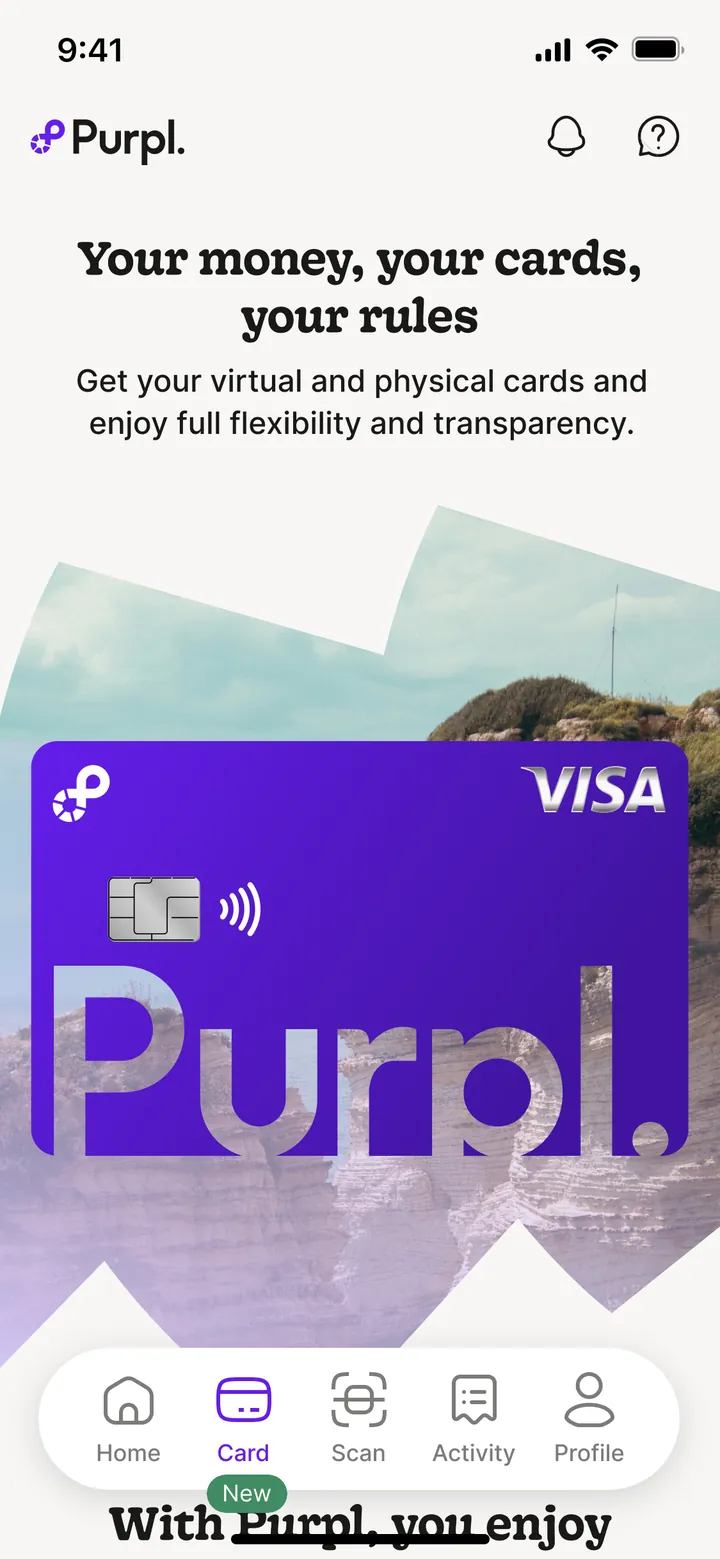
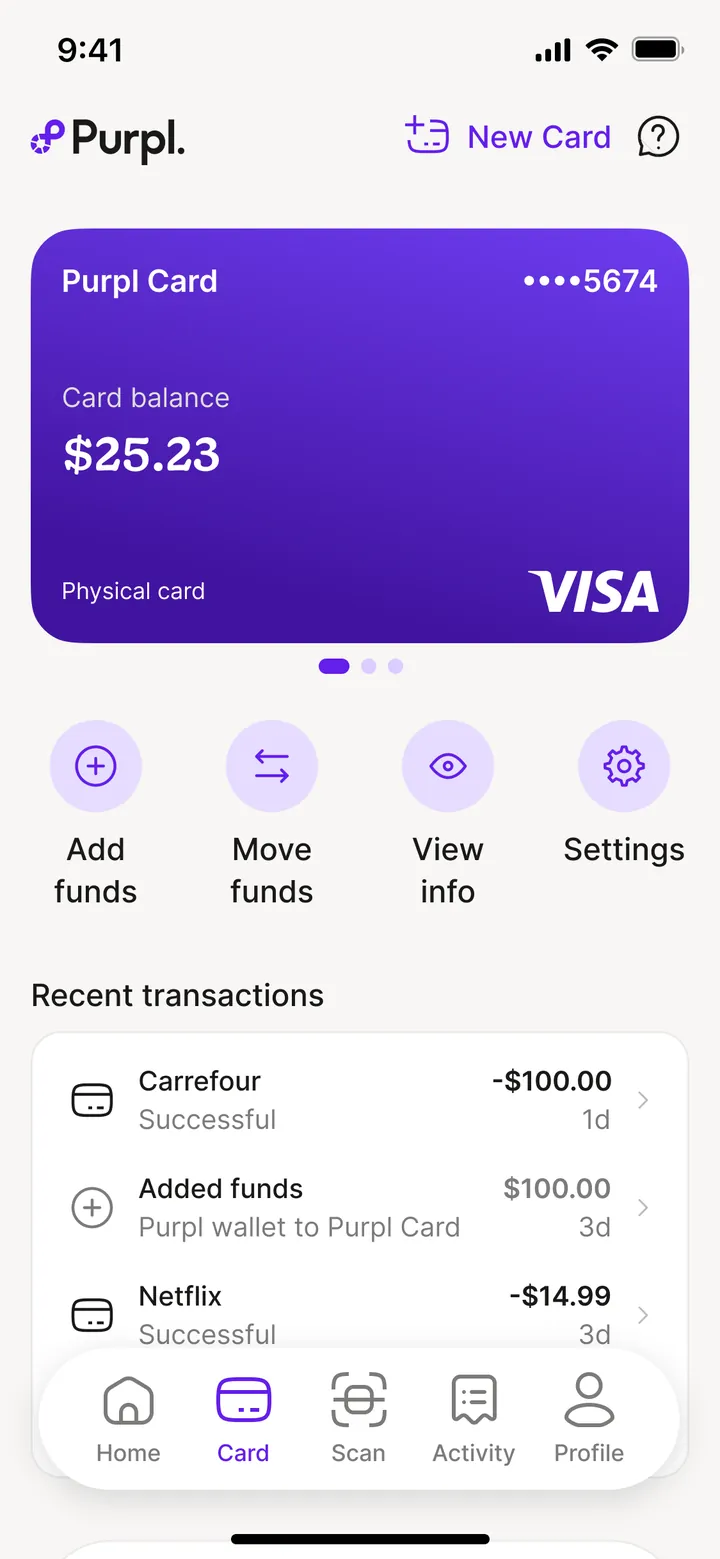
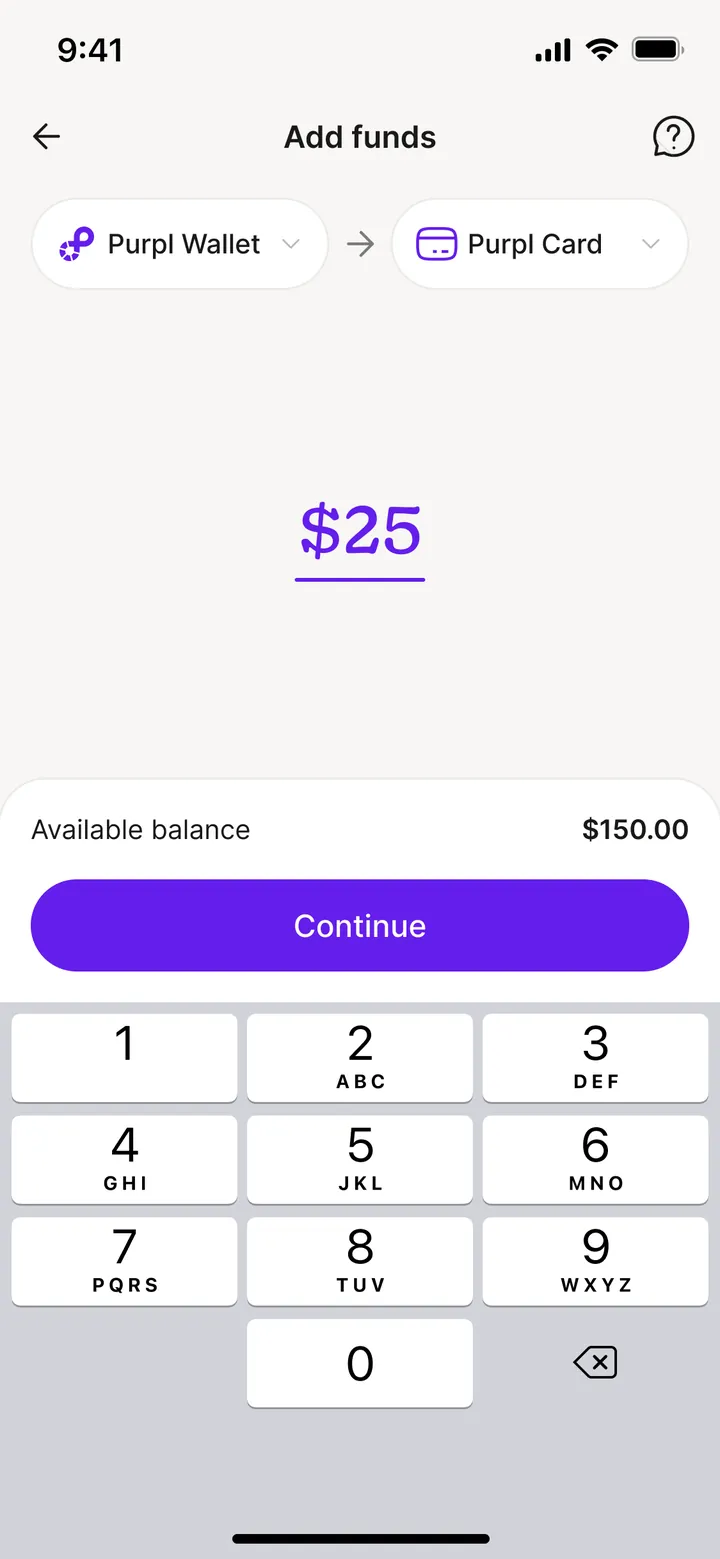
And the data shows that the cards are the biggest contenders to the classic cash-out funnel, and yeah, even almost 4 years after launch, cashing out is still the primary outflow channel on Purpl. The cards are slowly eating away at that pool, but it’s a long journey to change people’s payment habits, or any habits in general.
Closure
Looking back at what we delivered over almost 4 years, we went from a simple vision of allowing someone to receive money from abroad instantly and for free, to financial services that are close enough to a digital bank. And yet, we still have a long way to go, and a lot more to learn.
Back to projects